Despite its being originally broadcast on November 17, 1990, during the first season of The Disney Afternoon, it's hard not to regard "Scrooge's Last Adventure" as being the "moral and/or functional equivalent," at the very least, of the end of DuckTales' unexpectedly prolonged second season. Yes, "A DuckTales Valentine" was broadcast during the 1989-90 season, but it was not originally a syndicated episode, appearing instead as part of an NBC special, in the manner of the edited version of "Super DuckTales" the year before. I tend to regard "DTV" as inhabiting a sort of Limbo between the "second season" of Fall 1989 and the "third season" of Fall 1990. (It's an open question as to whether it should have stayed in "Limbo" permanently, but I'll address that when I review the ep.)
Of course, "Last Adventure," despite its 1989 copyright date, could kinda-sorta be legitimately counted as a 1990-91 episode as well, thanks to the good offices of Ken "Kopykat" Koonce and David "Double Your Pleasure" Weimers...
Though, to be fair to K&W, the differences between "Last Adventure" and "Bearly Alive" (which actually debuted a few weeks BEFORE "Last Adventure" finally aired) are clearly more distinct than those between "Allowance Day" and "The Time Bandit." The meshing of the two plots of "the main character mistakenly believes that he's dying" and "the main character participates in an adventure under the assumption that he's dying" is far more successfully executed in the TaleSpin episode than it is in "Last Adventure." Joe Torcivia and I recognized this immediately, and, in fact, Joe included his own suggestions as to how "Last Adventure" could have been "fixed" in an Appendix to our complete DUCKTALES INDEX. I'll highlight some of Joe's specific suggestions before I'm done. The main point is that, unlike "Ducky Mountain High" and "The Duck Who Knew Too Much," the flaws of which became somewhat clearer to me upon repeated close viewings, we KNEW that something was amiss with "Last Adventure" from the off. GeoX hit it square on the beak when he observed, "There's really two episodes here, and neither one gets the space it deserves." Which is a real shame, as "Plot A" (not to be confused with "Plan B"!) represents nothing less than an historical departure for Scrooge into what Joe termed "the incredible world of bits, bytes, glitches, and microchips," a full decade before the creation of the Nephews' I-Team and such "thoroughly modern" UNCLE $CROOGE stories as "World-Wide Witch" (UNCLE $CROOGE #320, August 2003). DuckTales fans may be permitted a bit of smugness when I note that, while these comic-book stories were panned by some readers who didn't cotton to the notion of Scrooge or any of the other Ducks getting involved with modern high-tech, no one of my acquaintance seemed to mind in the least Scrooge and Fenton's trip into the digital world, or, for that matter, Scrooge's earlier use of a PC and a word-processing program in "A Case of Mistaken Secret Identity."
An ENTIRE episode devoted to the interface between Scrooge and cyberspace, if executed properly, could have been one of the most memorable Duck-related media moments of all time. It also was certainly feasible for a good subplot to have been included; for example, Fenton's dogged determination to make up for the malfunction of the computer banking program could have been amped up a few levels, in order to show just how responsible even a bungler like Fenton can be when the stakes are high enough. But, no, K&W just HAD to fall back on the trope of Scrooge getting the impression that "[his] old ticker is beyond repair" and he's doomed (and therefore needs to think about preserving his fortune for all time). Adding to the "retreaded" feel of this plot line is the fact that the phone conversations that set up the misunderstanding in both "Last Adventure" and "Bearly Alive" both end with the same gag about "selling the spare parts."
In both "Adventure" and "Bearly," young characters' destruction of a precious inanimate object sets the plot-ball rolling down its well-established, Worry Room-depth groove. Kit Cloudkicker is probably technically more at fault than the Nephews, given his more mature character and HD&L's well-established reputation for rule-skirting, boyish hijinks, which has been downplayed a bit for their role in the TV series but has certainly popped up on occasion in the past. This is partially obscured by the amount and extent of the destruction seen on screen.
Both "Adventure" and "Bearly" also skirt the bounds of probability by having a "doctor who isn't really a doctor" break the "bad news." But then, we get the moment of true divergence when Scrooge, the party directly involved, receives the dubious diagnosis, as opposed to Rebecca Cunningham, who is the affected character's boss. Baloo subsequently gets the word from Becky, and the actions that follow (to wit, Baloo daring to enter "The Bearmuda Trapezoid" and make one final bid for eternal notoriety) flow directly out of that revelation. Moreover, those actions are entirely personal in nature, and, despite the ultimate introduction of the subplot involving Howard Huge and the Spruce Moose, would have limited repercussions on the world at large, whether or not they result in success. Scrooge's decision as to what to do with his money, and his subsequent loss of said money in the computer, would have far greater societal ramifications (as we saw in a far more dubious context in "Yuppy Ducks"), making the lengthy delay in his finding out the truth seem all the more aggravating. The fact that Fenton knows the real truth but never does tell Scrooge, even in the face of Scrooge verbally confronting his mortality on several occasions, also doesn't sit too well with the attentive viewer.
Once "Adventure" and "Bearly" shake loose from the "dying" conceit, they both lay out reasonably well-crafted adventure scenarios. The major reason why "Adventure" sustains more long-term damage is that it simply takes too long for the "dying" business to be cleared away, especially when one considers what's to follow in its wake. Before that "one giant leap for Duck-kind," we have to trudge through a painful first act in which HD&L do, as Greg suggests, channel a number of the less attractive characteristics of the cynical Quack Pack Nephews -- with the added abrasion of the hideous "Plan B" crying fit. The juxtaposition of the smarmy "false sincerity," the brute-force bawling, AND the po-faced dissing of "the good Junior Woodchuck thing to do" is terminally cream-curdling, to be honest, no matter what HD&L might (and, in fact, do) do later in the ep to express their concern for Scrooge and Fenton's well-being. (I'm less harsh on the boys' disruption of Scrooge and Fenton's progress inside the computer when they start to play "Quackman." They couldn't have known what was going on at the time. Even so, it might not have hurt for them to have asked who had been using the program that was currently running on screen before they went ahead and made the switch.) Are the boys as bad here as they were in "Yuppy Ducks"? No, but it's an uncomfortably close call.
The misled Scrooge's interactions with his household staff aren't much better. Scrooge's reported comment to Mrs. Beakley -- "The way [you] look, [you] must enjoy [your] cooking" -- really does come off as, in GeoX's words, just about "the most dickish thing" Scrooge has ever said, and the "X is for wimps" joke didn't justify multiple repetitions, each of which is less successful than the last. The confab with Fenton is a little more successful, mostly because Fenton's suggestion that Scrooge turn to computer banking really is a pretty clever idea (particularly in 1989), but, basically, we're just kind of spinning our wheels until the fateful moment when the "glitch" makes its appearance. The brief scene of Duckworth crying, even though he hasn't been told by Scrooge why he should be crying, is the only bit that really works. One of the few saving graces here is the early introduction of Scrooge's magnet-tipped cane, a classic example of a "small detail" being slipped into the picture well in advance of its ultimate use.
In a more philosophical sense, one reason that Scrooge's reaction to his fake fate never really rings true stems from the nature of Scrooge himself: Scrooge resigns himself to his apparent fate much too easily. It is more believable to imagine Scrooge, after he has absorbed the initial shock, doing everything that he possibly can to find a way to preserve his life against all odds, just as he has always fought to protect his fortune, not for its monetary value, but for its symbolic value as a reflection of his life of toil. In Carl Barks' illustrated prose story "Go Slowly Sands of Time" (UNCLE $CROOGE McDUCK: HIS LIFE AND TIMES [1981]; later redone as a comic-book story in 1983), Scrooge goes to the trouble of seeking out a distant land of long-lived people in order to find the "secret" of eternal vim and vigor, only to find that he's known the "secret" all along, which is to love your work and take pride in what you do. This proactive Scrooge is nowhere to be found in "Last Adventure." Instead, we get a carbon copy of the fatalistic, almost dazed Scrooge of an episode like "The Money Vanishes." Not until Fenton (rather insensitively) suggests that "there's nothing [Scrooge] can do" about the lost cyber-money does Scrooge snap back into form, snarling, "Never say that to Scrooge McDuck!" Better late than never, but still... um... late.
So how could this "pre-computer" portion of the episode have been improved? Joe suggested that a massive Beagle Boy raid on the Money Bin, similar in scope to, or perhaps even bigger than, the attack in "A Drain on the Economy" could have provided the setting for Scrooge's decision to seek a "terminally foolproof" way to secure his fortune. Joe theorized that Scrooge could have gotten steadily wearier and wearier during the course of the lengthy battle, reflecting the cumulative effect of his advanced age. Realizing that additional generations of Beagles are waiting on the horizon, Scrooge could then have made the decision to find an ultimate solution, giving Fenton the opening to suggest computer banking. This would do away with the need for a "Scrooge thinks he's dying" context, would include the subtheme of Scrooge wanting to preserve his fortune for the benefit of HD&L and Webby, and would allow for a more thorough exploration of the world inside the computer. Makes sense to me! (A more modern take on this scenario, reflecting the more reliable software of the 21st century, might include Scrooge being worried about identity theft and subsequently fighting with a cyber-villain for control of his electronic fortune.)
Even though the circumstances are quasi-tragic, it's hard not to get through the "Fenton's disrupted demo" sequence without emitting a chuckle or three. Fenton's exaggerated reactions are certainly a major reason why, and their combined effect is amplified by Alan Young's comparatively restrained, yet steadily more infuriated, verbal reactions to Fenton's obvious discomfiture.
Enter "accommodating source of miracles" Gyro, whose quality of performance here, after a somewhat up-and-down second season as a whole, can hardly be faulted. (No, not even that temporary detour for the broccoli sandwich. I'm speaking in technical terms here.) Flourishing a soon-to-be-obsolete floppy disk, Gyro proposes to digitize Scrooge so that Scrooge can hunt for the "glitch." Fenton then makes up for his mistake -- which, in truth, isn't necessarily a mistake at all, given that the appearance of the "glitch" couldn't have been predicted -- by demanding that he be allowed to accompany Scrooge. His methods of persuasion include... *sigh*... "Plan B." But his intent is still noble for all that.
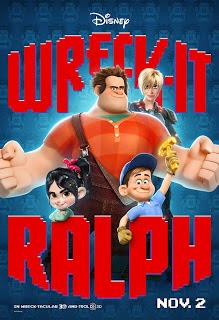
And off they go into the wired blue yonder! The "Cyberworld" visuals we see in Act Two and Act Three are appropriately impressive, though they're obviously not meant to be taken seriously -- at least, not as much as the visuals seen in Disney's original Tron (1982). A "cyber-vehicle" -- the "Diskdrive," in Scrooge and Fenton's case -- appears in both cases, but "Last Adventure" interprets it as a literal nautical vehicle, swimming on an "ocean of current." This is amplified when "Moby Glitch" reenacts a scene in Jaws (1975) and announces its presence by taking a chomp out of the Ducks' "butterfly net" (which the Ducks presumably produced in the time-approved "Toon" fashion). Fanciful, to be sure, but a lot more satisfying than, say, the scenario presented in the 101 Dalmatians: The Series episode "Virtual Lucky" (1997), in which the computer screen is, in effect, a glass partition, and the scene inside the computer is presented as a 3-D diorama, with the characters inside the computer able to talk to the characters on the other side of the glass. Wreck-it Ralph (2012) was rather more successful in pulling off this latter conceit, primarily because the characters "inside" and the characters "outside" could not communicate in any way, not to mention that the CGI characters were rendered in 3-D to begin with.
The parallel plot threads of Scrooge and Fenton trying to find their way through an ever-changing computer environment and Gyro trying to dope out a way to rescue them are developed in a thoroughly appropriate, tension-tightening manner. Ending Act Two with the "plug" literally being pulled on Scrooge and Fenton was exactly the right decision, not least because it allows for a glorious opening to Act Three, in which the "Cyberworld" literally reconstitutes itself before our eyes, climaxing with the reappearance of Scrooge and Fenton. (Cleverly, and correctly, the Ducks are deposited more or less right back at the place where they entered the computer, at the helm of the "Diskdrive.")
Once Scrooge and Fenton "reach out and touch someone through the telephone system," things begin to get just a bit wonky. Interpreting the phone wire as an empty tube is an acceptable metaphor, but it edges a bit closer to "diorama" territory than we had previously been. The references to phone modems are probably the single most technologically dated aspect of the episode, in the sense that this material would have to be completely revised and updated in a modern retelling of the story. (For example, Gyro would need a different manner of directly communicating with Scrooge and Fenton than literally talking through Scrooge's phone.) Thankfully, the climactic, though sadly off-screen, punch-up (with Fenton literally getting eaten!) and Scrooge's belated use of the magnetic cane make for an exciting ending and a climax that Captain Ahab could only have wished for in his dreams.
Now, how to get our heroes and Scrooge's money back to the world of flesh and feathers?...
Oh, boy... This is all kinds of "inoperative." Joe, who has worked in the computer field for his entire life, really didn't like the sloppy, almost defiantly lazy manner in which this was handled. In his alternate scenario, following the defeat of "Moby Glitch," Scrooge and Fenton were threatened with extinction by the "reformatting" of the floppy disk, only for Gyro to pull their digitized tailfeathers out of the fire at the last minute. With things back to normal, Scrooge then demanded that Fenton get his money out of the computer and back to the Money Bin. Refreshed by his adventure, Scrooge then turned with renewed enthusiasm to his battles with the Beagle Boys, now realizing that "there is much worse" than engaging in continual battles with a flesh-and-blood foe. Carrying this scenario out on screen would have required additional explanations of real-world computer terms, but it could certainly have been done in an imaginative manner. Moreover, since the theme of Scrooge dying would have been removed to begin with, we could have been spared this unfortunate fadeout scene...
As was the case with the other members of "The Tardy Trio," "Last Adventure" could have been considerably better than it was. The sense of loss is probably the most acute here, though, precisely because the core idea was so strong, not to mention exceptionally forward-thinking. It was a shame that the idea wasn't given sufficient "elbow room" to be exploited to its fullest.
.
.
.
"DuckBlurbs"
Believe it or not, The Disney Afternoon wasn't finished with the "mistaken mortality" trope once "Last Adventure" and "Bearly Alive" hit the airwaves. Never a series to create "something new" when "something borrowed" was already close at hand, Goof Troop gave us the 1992 episode "Terminal Pete," in which Pete learns that he's supposedly dying and decides to make the most of his remaining days in Spoonerville by... becoming a stuntman. What can I say, it was THAT kind of show.
(GeoX) …so why isn't this the last episode, then? Are they implying, thusly, that Scrooge Will Never Die? Or, more likely, was it planned to be the finale, but was shuffled around due to some desire to end with a two-parter?
It was almost certainly a clumsy attempt to telegraph the "dying" trope, but it wound up giving the wrong impression as to the series' future plans. When I read the synopsis in the Gladstone DUCKTALES comic, I originally believed that it really was Scrooge's "last" adventure, at least in a DuckTales context. That was why the appearance of new, 1990-copyright eps in Fall 1990 came as such a huge surprise.
(GeoX) If there's one thing I like, it's media about "cyberspace" from a time when nobody was really clear on what that entailed.
I think you've hit on the reason why Tron became such a belated cult favorite. "Last Adventure" had the potential for cult status, too, had it not been for... well, you know...
(GeoX) Note that this computer is actually in the bin, so now it's buried under huge mounds of cash--if Scrooge ever wants to get it out, he's got his work cut out for him.
Since Scrooge's home computer is in a convenient location (the workspace/TV room/conversation pit/etc.), it would stand to reason that his Money Bin computer should be in a similarly commodious place -- for example, next to his desk. The Money Bin computer was situated where it was only because Koonce and Weimers simply HAD to have their lame-o, "money-gushing" ending. Ugh.
(GeoX) "Nice game those Duckburg Dodgers had last night, huh?" The Mallards, the Stealers, and now a third baseball team??? Well, if the Stealers play baseball, I suppose the Dodgers can play football. You'd think there could at some point have been some sort of consultation on the subject among the writers, though.
There is a precedent for a football team being named the Dodgers, so I'm going with the football theory.
(Greg) Oh lord; how contrived and forced can you get? Are we supposed to believe that two nephews can destroy a grandfather clock THAT easily? Kit yanking out the compass in Bearly Alive is much more believable than this... And how did Mrs. Beakley NOT hear the noise?!
Well, if the clock is a fragile antique, I suppose that it would be more vulnerable to "mass destruction," provided that it was struck roughly enough. As for Mrs. B., she may have been out of earshot, for example, down in the kitchen area near the breakfast nook.
(Greg) Scrooge answers the phone and yes; it's Doctor Glockenspiel (late Hal Smith in case you didn't notice)...
Actually, it's Hamilton Camp. Likewise, Nurse Hatchett is voiced by Joan Gerber, rather than Kathleen Freeman. Though she received a credit, Freeman apparently did no voices here.
(Greg) Dewey wants to put it to a vote; and all of [the Nephews] put the money behind the[ir] backs and whistle. Memo to GeoX: I realize that you hate the fact that they betrayed the Woodchucks in such an insulting way; but seriously, the Woodchuck Guide Book has been such a hit or miss book in terms of creditability that at this point; the writers [have stopped] caring about it since it's already screwed up in this canon.
It's the principle of the thing more than anything else -- the long-established idea that HD&L, as GeoX says, take the ideals of the JWs very seriously. They would probably do that even if the Guidebook were more fallible than it is typically depicted as being in the comics. Carl Barks and the other people who wrote JUNIOR WOODCHUCKS stories certainly had more than their share of fun with the inflated pretensions of the Woodchucks as an organization, but they never depicted the boys as cynically playing with the notion of what they should do as JWs. I still think that HD&L came off FAR WORSE during "Yuppy Ducks" when they abandoned the comatose Scrooge, but Koonce and Weimers' reuse of the "Not the honest Junior Woodchuck bit again!" trope here is one of the strongest suggestions to date that the duo have well and truly burned out on the series. (They will, however, prove to have just enough gas left in the tank to make one more meaningful contribution -- albeit with considerable help -- before the curtain comes down.)
(Greg) The nurse hangs up thus showing that she has absolutely no sense of
humor whatsoever and then Fenton hears groaning and we head into the
vault to see that Scrooge has somehow appeared on the area where the
diving board used to be and now it's gone for no reason whatsoever. Not
to mention that we never saw Scrooge walk in; so was he in the vault all
this time? And since the vault is open; he surely had to hear Fenton
insult him.
I don't have an explanation for this, either. I can imagine Scrooge having a VERY explosive reaction when he walked in and found Fenton seated at Scrooge's desk!
(Greg) Scrooge goes nut[s] and swings the cane around getting off death reference #2 and nailing the cane right on the corn on his foot and yelping and doing the foot grabbing spot in pain. He clearly was aiming for Fenton and missed by a country mile. The "I'm not [about] to die a father!" makes no sense though; it should be "I'm not going to die pennyless in the gutter!".
Scrooge actually says "I'm not about to die a pauper!", which certainly makes sense in context.
Next: Episode 96, "A DuckTales Valentine."
Comics, book, and DVD reviews (and occasional eruptions of other kinds)
Showing posts with label 101 Dalmatians. Show all posts
Friday, August 22, 2014
Tuesday, November 26, 2013
DUCKTALES RETROSPECTIVE: Episode 65, "Till Nephews Do Us Part"... and a look ahead
"Part"ing the first season is such sweet sorrow...
"Till Nephews Do Us Part" was intended to be a blockbuster and delivers the goods, though it would be a stretch worthy of Mr. Armstrong himself to call it a masterpiece. Most of the ep's weaknesses lie in the area of characterization -- and, no, I'm not referring to Scrooge's "mushin' out" as he falls under the spell of that wily woman on the make, Millionaira Vanderbucks. HD&L are noticeably more naive and bratty than was their normal first-season wont (though, as Greg has pointed out, this may have been a harbinger of the way the boys would occasionally be written during subsequent seasons). Mrs. Beakley and Duckworth, meanwhile, don't have the excuse of naivete to fall back on in their cluelessness regarding Milly's sinister plans for the household. Ken Koonce and David Weimers' script, while nowhere near as inept as some of their lesser efforts, doesn't contain a fraction of the imagination and laugh-out-loud humor seen in the likes of "Double-O-Duck," opting instead for "money-related terms of endearment" (GeoX) and characters misunderstanding words and expressions (and if you don't recognize which ones I'm referring to ASAP, then you truly must BE a sap). Still, the plot is reasonably good, we get a nice mixture of "domestic" and "adventurous" material (though the latter has a distinct touch of the farcical), and, of course, there's the now-legendary wedding scene with all of those character cameos. I've no idea whether "Till Nephews" was in production at the time that the decision was made to extend the series' life with additional new episodes, but the mere existence of this scene, with its air of "wrapping things up," suggests that it was not.
The idea of a conniving woman zeroing in on Scrooge's fortune is anything but a new one. Glittering Goldie herself was the original (and literal) "gold-digger" in "Back to the Klondike," "drugg[ing] and roll[ing]" miner McDuck and swiping his Goose Egg Nugget. However, Barks' Goldie doesn't fit the mold of a "gold-digger" in the modern sense, in that she would have been perfectly content to have cut and run with that one treasure had fate (and a peeved Scrooge) not intervened. She acted more like a pure opportunist than someone who was in it for the long haul. The DT version of "Klondike" represents the other side of the coin, as it were, suggesting that Scrooge and Goldie might have enjoyed a happy life together in Duckburg had Dangerous Dan not queered the relationship between them. After reconciling with Scrooge, both versions of Goldie receive unexpected opportunities to reunite with him -- with the offer being rather more obvious in the DT version of "Klondike" than in Barks' less sentimental original -- but the hard-hearted "greediest gal in the Klondike" has long since become content with her backwoods life and consciously sets aside any further designs on Scrooge or his money. (In the DT version, at least, she does compensate for this by apparently tying some fairly substantial apron strings around her man. More on that later.)
If Goldie is a character whose "gold-digging" tendencies have atrophied over time, then Romano Scarpa's Brigitta MacBridge is one who never had specific designs on Scrooge's money to begin with, but who nonetheless manages to come across as a "gold-digger." That's "dig" as in "keep burrowing and burrowing like El Capitan at the end of 'Too Much of a Gold Thing', determined to win Scrooge over." It is this maniacal persistence that drives Brigitta-bashers crazy. Disney's original "annoying business lady" (apologies to Rebecca Cunningham) is something of an acquired taste for us American Disney comics fans. For my own part, I find her an enjoyable addition to the Duck cast and wouldn't have minded seeing her in a DT episode or two. (I even have a voice actress picked out for her -- Tress MacNeille, doing a "friendlier-sounding" version of her sneering Lady Bane-esque voice for Milly.) Brigitta's apparently sincere affection for Scrooge makes her easy to like.
Millionaira Vanderbucks seems at first glance like a typical, overbearing, MacNeille-voiced female villain. In fact, she's considerably more subtle than that. Consider that when Scrooge goes to the Web Corporation building to inquire about purchasing the Malaysian land that harbors the "lost relics," Milly does not give clue one that she knows who he is! For the "wealthiest woman in the world" not to recognize Scrooge on sight seems most improbable. Scrooge has more of an excuse for not initially recognizing Milly, given that he seems to hold a low opinion of the very idea of a distaff tycoon. (Who knows, maybe Brigitta DOES exist in the DT "universe.") It's never made clear when, exactly, Milly hatched her devious plot to ensnare Scrooge in the coils of "matrimoney." Assuming that she had no prior idea that Scrooge would be coming to buy her land, the whole notion must have popped into her head during this initial conversation, before she suggests that the two of them talk about the deal over dinner. I don't know about you, but any villain who shows the ability to think on her webs as quickly as that has got MY respect from the off.
The ensuing dinner at McDuck Mansion (BTW, did they even have time to EAT dinner? We cut directly from a conversation over empty plates to Scrooge escorting Milly to the door) sets all the character dynamics for the rest of the episode in motion. Scrooge is smitten with Milly; the Nephews and Webby are suspicious, with fairy-tale-conscious Webby even evoking Snow White's Wicked Queen as a comparison; Milly is appalled by the mere existence of the "ghastly" children (I imagine that Scrooge keeps media references to their presence in his household to an absolute minimum for safety's sake); and Mrs. Beakley and Duckworth seem oblivious to the poisonous atmosphere. Note that when Scrooge returned home after his initial confab with Milly, he was "tetched," but not so much so that he didn't think "business first" when giving instructions to HD&L. It's only after the second parting, after Milly presumably has had time to plan her "charm offensive" more thoroughly, that Scrooge acts in a hopelessly punch-drunk manner.
The bee ploy could have been employed on anyone; the next scheme relies completely upon Milly's total ignorance of life in the outdoors. That's the only possible reason why a smart cookie like Milly would believe that one can keep away "Malaysian Thistlesmashers" (or, as Tress pronounces it at one point, "Thishlesmashers") by burdening oneself with an expedition's worth of luggage.
... and Duckworth's helpful definition of "trespassing" reveals that they've recently raided a neighbor's apple orchard. (Applejack would not be amused.) The classic "we hate girls" reaction to Scrooge's infatuation with Milly is not out of line with their previous characterization, but one can't say the same about Dewey's comment, "I haven't seen Unca Scrooge so loony since he told us about his old girlfriend Goldie!" Given that the boys have actually met Goldie and witnessed (if not entirely appreciated) the two characters' feelings for each other, Dewey's sentiment strikes me as being decidedly uncharitable. Presumably, the idea of inviting Goldie to Scrooge and Milly's wedding was primarily motivated by Webby, who responds to Dewey's remark by suggesting that the kids remind Scrooge of how much he loves his old flame.
Of course, Webby isn't on hand to tamp down the Nephews' natural inclinations when they finally confess that they don't want Scrooge to marry Milly. This follows the waterfall-plunge scene, which might have been made more interesting by improved staging and animation (we only see Scrooge and Milly's tumble in longshot) but does deliver Launchpad's one priceless contribution to the ep: "That darn eject button is always gettin' in the way!" Given that LP is present in the main story strictly for utilitarian reasons -- to get the party to Malaysia -- and that Koonce and Weimers didn't even see fit to let him crash the 'copter, this was a welcome reminder of LP at his laugh-out-loud best. Also, the "ASAP" gag worked better with Launchpad than it did with Duckworth, which isn't much of a surprise.
And so we reach the wedding... and the famed boatload of cameos therein. Some kind soul created a panoramic image of the scene outside the bank, for which I am eternally grateful. Click on it, and it should enlarge. Oddly enough, this wouldn't be the only time that Walt Disney TV Animation tried something like this. 101 Dalmatians: The Series wrapped up its 65-episode manifest with the three-part adventure "Dalmatian Vacation" (1998), which climaxed with Roger and Anita Dearly reprising their wedding vows. (Actually, they're technically getting married for the first time, since their original wedding was overseen by a con artist.) Whereas the McDuck-Vanderbucks wedding was presumably planned very carefully, with formal invitations being sent out to all of the invitees (except the villains, of course), the one-shot characters who returned for the wedding in "Dalmatian Vacation" were quite literally rounded up on the spur of the moment, with no explanation given as to how they got to the site so quickly -- or at all. Then again, 101D tended to be sloppy that way.
Of course, DuckTales' use of recurring background characters (the members of the Explorers' Club, the "pignitaries," Vacation van Honk, etc.), which seemed so ground-breaking at the time, has long since been one-upped by the immense casts of shows as diverse as The Simpsons, Family Guy, and My Little Pony: Friendship is Magic. But, as I have said before on several occasions, DT deserves credit for "getting there first."
At the "vaultar," Milly finally cracks under the strain and reveals her true motivation for marrying Scrooge. I will give her credit for holding out a bit longer than the evil Queen Chrysalis in "A Canterlot Wedding." Disguised as Princess Cadance, Chryssie literally sings about the impending culmination of her scheme as she is marching down the aisle. They say that marriage ceremonies are stressful, but they don't know the half of it...
Yes, how about it, indeed. I can see where that might come in handy in a pinch... though I certainly hope that HD&L take showers before going out in public.
(Greg) Duckworth goes to the front door and opens it to reveal Mrs. Vanderbucks in a classy red dress with some gold metal trim and black gloves with black heels. Very classy for a sneaky heel there.
And the effect is enhanced by that... highly interesting "from the bottom up" shot. Though I have to say that the wad of red lipstick at the end of Milly's beak rather weakens the effect for me. Once again: Lipstick on female Ducks, no matter how sexy, is weird-looking.
(Greg) Vanderbucks decides to sell the land after all and then they walk out as the nephews give the thumbs up and feel that Vanderbucks isn't so bad after all.
And thus begins an intriguing intra-episode meme: The joint "thumbs up" shot. It stands out precisely because we rarely saw the characters indulging in such choreographed activity before. Not even HD&L have gone in for it that often, and they, of course, did the famous shtick of completing sentences as a group in the shorts and in many of Barks' early stories. With all the thumbs on display here, you'd think that the characters were rating movies or something. (Would that mean that the kids' "throat-slashing" joint at the end of Act One was meant to signify "Cut!"?)
(Greg) ... We cut back to inside the hallway as the nephews and Webby are pacing around sulking because Scrooge hasn't played with them or read to them in weeks. There is a picture of Goldie with her blunderbuss on the right side of the wall.
It's the same picture that we saw in Scrooge's bedroom in "Dr. Jekyll and Mr. McDuck." Wonder why Scrooge relocated it to a public area. BTW, I was glad to see Koonce and Weimers avoid the "whirlwind courtship" cliche and admit that it took a while for Milly to really get her hooks into Scrooge.
(Greg) After the commercial break; we go to the hallway as the nephews and Webby look around and see that the coast is clear. They then practice the fine art of not being seen as their clothes are on a stick and they make it down the stairs and they have a meeting of minds with Mrs. Beakly. And it wasn't at the dumb waiter. Mrs. Beakly wants answers to this sneaking and Webby basically states that they are running away. Now if I was going to make a case here; I would not call Millie mean. Besides; I would have said: “We overheard Millie talking about you and she wants to fire you.”. That would have more credi[bility].
Webby is the one who refers to Milly as "mean," which I can easily see her doing. The bigger issue is that HD&L couldn't have warned Mrs. B. that Milly wants to fire her, because they apparently don't know what a "pink slip" means.
(Greg) So we see a lot of people going into the [bank]... Everyone is there including Gladstone Gander, John D. Rockefeather, Magica DeSpell (!!!!) (we see her sign the marriage book in the scene to the left pan) along with Flintheart Glomgold, Feathers Galore (!!!), Carl Sa[g]ander, Ma Beagle, Burger Beagle, Bouncer Beagle and Big Time Beagle among them that I can clearly see outside.
Actually, the Beagle lineup changed in midstream. In the panorama shot, Ma, Big Time, Burger, and Bankjob can be seen heading for the bank. However, when the disguised Beagles rob the bank, Ma, Big Time, Burger, and... hmm, is that Bouncer? I suppose it is... are the ones doing the deed. I guess that Bankjob and Bouncer switched off when the Beagles ran home to plan their caper. Speaking of changes, June Foray's Ma Beagle voice is noticeably different here than it is at any other point of the series.
(Greg) I remember hating this episode back in the day as I [was] with the nephews on the whole thing and I had no sympathy for Scrooge. Today; my views are different and I think this is one of the best episodes I have seen. I call it a case of a really good heel in Millie being a trooper through the whole thing until the nephews pushed their pranks one too far (which I thought was pointless since there was enough idiots in the scene to do Millie in by themselves without the nephews resorting to low tricks). I ended up having a little sympathy for Millie and Scrooge and not so much for the nephews, Mrs. Beakly or Webby.
I think you were subconsciously picking up on the Nephews' increased "brattiness quotient." While Milly certainly deserved some rough treatment, the boys did pour it on and evoke at least a small amount of sympathy for her. Koonce and Wiemers may have reflected that by allowing Milly to close the ep on an up note (for her), chasing Glomgold with renewed vigor.
Next: I'll be back in early January with Episode 66, "Time is Money, Part One: Marking Time."
"Till Nephews Do Us Part" was intended to be a blockbuster and delivers the goods, though it would be a stretch worthy of Mr. Armstrong himself to call it a masterpiece. Most of the ep's weaknesses lie in the area of characterization -- and, no, I'm not referring to Scrooge's "mushin' out" as he falls under the spell of that wily woman on the make, Millionaira Vanderbucks. HD&L are noticeably more naive and bratty than was their normal first-season wont (though, as Greg has pointed out, this may have been a harbinger of the way the boys would occasionally be written during subsequent seasons). Mrs. Beakley and Duckworth, meanwhile, don't have the excuse of naivete to fall back on in their cluelessness regarding Milly's sinister plans for the household. Ken Koonce and David Weimers' script, while nowhere near as inept as some of their lesser efforts, doesn't contain a fraction of the imagination and laugh-out-loud humor seen in the likes of "Double-O-Duck," opting instead for "money-related terms of endearment" (GeoX) and characters misunderstanding words and expressions (and if you don't recognize which ones I'm referring to ASAP, then you truly must BE a sap). Still, the plot is reasonably good, we get a nice mixture of "domestic" and "adventurous" material (though the latter has a distinct touch of the farcical), and, of course, there's the now-legendary wedding scene with all of those character cameos. I've no idea whether "Till Nephews" was in production at the time that the decision was made to extend the series' life with additional new episodes, but the mere existence of this scene, with its air of "wrapping things up," suggests that it was not.
The idea of a conniving woman zeroing in on Scrooge's fortune is anything but a new one. Glittering Goldie herself was the original (and literal) "gold-digger" in "Back to the Klondike," "drugg[ing] and roll[ing]" miner McDuck and swiping his Goose Egg Nugget. However, Barks' Goldie doesn't fit the mold of a "gold-digger" in the modern sense, in that she would have been perfectly content to have cut and run with that one treasure had fate (and a peeved Scrooge) not intervened. She acted more like a pure opportunist than someone who was in it for the long haul. The DT version of "Klondike" represents the other side of the coin, as it were, suggesting that Scrooge and Goldie might have enjoyed a happy life together in Duckburg had Dangerous Dan not queered the relationship between them. After reconciling with Scrooge, both versions of Goldie receive unexpected opportunities to reunite with him -- with the offer being rather more obvious in the DT version of "Klondike" than in Barks' less sentimental original -- but the hard-hearted "greediest gal in the Klondike" has long since become content with her backwoods life and consciously sets aside any further designs on Scrooge or his money. (In the DT version, at least, she does compensate for this by apparently tying some fairly substantial apron strings around her man. More on that later.)
Millionaira Vanderbucks seems at first glance like a typical, overbearing, MacNeille-voiced female villain. In fact, she's considerably more subtle than that. Consider that when Scrooge goes to the Web Corporation building to inquire about purchasing the Malaysian land that harbors the "lost relics," Milly does not give clue one that she knows who he is! For the "wealthiest woman in the world" not to recognize Scrooge on sight seems most improbable. Scrooge has more of an excuse for not initially recognizing Milly, given that he seems to hold a low opinion of the very idea of a distaff tycoon. (Who knows, maybe Brigitta DOES exist in the DT "universe.") It's never made clear when, exactly, Milly hatched her devious plot to ensnare Scrooge in the coils of "matrimoney." Assuming that she had no prior idea that Scrooge would be coming to buy her land, the whole notion must have popped into her head during this initial conversation, before she suggests that the two of them talk about the deal over dinner. I don't know about you, but any villain who shows the ability to think on her webs as quickly as that has got MY respect from the off.
The ensuing dinner at McDuck Mansion (BTW, did they even have time to EAT dinner? We cut directly from a conversation over empty plates to Scrooge escorting Milly to the door) sets all the character dynamics for the rest of the episode in motion. Scrooge is smitten with Milly; the Nephews and Webby are suspicious, with fairy-tale-conscious Webby even evoking Snow White's Wicked Queen as a comparison; Milly is appalled by the mere existence of the "ghastly" children (I imagine that Scrooge keeps media references to their presence in his household to an absolute minimum for safety's sake); and Mrs. Beakley and Duckworth seem oblivious to the poisonous atmosphere. Note that when Scrooge returned home after his initial confab with Milly, he was "tetched," but not so much so that he didn't think "business first" when giving instructions to HD&L. It's only after the second parting, after Milly presumably has had time to plan her "charm offensive" more thoroughly, that Scrooge acts in a hopelessly punch-drunk manner.
Milly: "I'm thinking of expanding..."
Me: "I think a certain amount of contraction is in order."
Needless to say, I think that Koonce and Wiemers went a teentsy bit overboard with the financially-themed pet names; even a money-hungry "gold-digger" would probably have been sickened by at least a few of them. Scrooge and Milly's "cash-ship" is actually at its best when K&W pull back on the pecuniary throttle and try to underplay things. The scenes in the "lovers' park" are cute and charming...
Note the "$" signs encircling the lovers' heads.
... (though what guard allows an armored car to be driven with its doors open? Must be one of Scrooge's), while the "proposal/merger" scene itself has so many good lines ("It's rare that a woman compounds my interest daily," "I can't wait to take you home to meet my accountant") that the pet names are only a minor annoyance. Ignore the surrounding context, and some of these scenes and lines might even have worked for a Scrooge/Brigitta romance. Of course, tip things slightly the other way and you've got a Duck-version of Beverly Hills Teens.
Of course, Milly's intentions throughout all this are decidedly dishonorable, even though some of them don't seem to make sense. Plans to send Webby to a "finishing school" would be rather pointless if Mrs. Beakley were to be given the pink slip at the same time -- and speaking of jettisoning the servants, wouldn't Scrooge and Milly need reliable servants anyway? Does Milly expect that Scrooge would simply accept her kicking out Mrs. B. and Duckworth and (presumably) importing that butler-ish guy ("Bottoms"? "Bubbums"?) who's following her around at the end of Act 2 and later helping her suit up before the wedding? Milly's loud proclamation of her plans outside HD&L's door (whether she recognizes it as being such or not) suggests that, even as her scheme seem to be proceeding according to plan, she may not have the mental discipline required to keep it together and may end up, well, cutting her OWN throat.
Act Two starts with the low point of the episode, Mrs. Beakley's casual dismissal of HD&L and Webby's warnings -- until the nanny realizes that she, herself, is to be a casualty of the "New Wench Order." GeoX calls this "a mean and not-too-believable interpretation of her character," and I have to agree. The Mrs. B. I know would have ignited the second she heard about Milly's plans to send Webby to "finishing school." Thankfully, Mrs. B. makes a quick recovery, and soon, the plot to scare Milly off by putting her through the wringer on the relics-seeking trip to Malaysia is well and truly under-web. The sequence of "rotten pranks" begins with a swipe from the Disney movie The Parent Trap (1961). Just as Hayley Mills and... um, Hayley Mills tried to spook their divorced father's gold-digger sweetheart by pouring honey on her feet to attract bears, so HD&L use the honey spray (where would you buy that, I wonder?) to send "a whole bunch of bees" in the direction of Milly's corpus. Amazingly, the scene doesn't end as you might expect, with Milly swelling up like a balloon due to dozens of bee stings; instead, she merely endures a water-ducking.
Greg confessed a sneaking admiration for Milly's ability to stand up to all the abuse she takes during these scenes. I suppose so, though her persistence, like El Capitan's, may have more to do with sheer greed (which by now must be shading to obsession) than anything else. I will, however, give her full marks for surviving that terrible fall down the cliff after she's been scared by the Bush Duck. Scrooge provides a cute contrast to what is actually a fairly tense scene by coming out of the cave with the "lost relish," tearing away any lingering sense of seriousness about the nature of the Ducks' "adventure" and revealing it as a mere excuse for gaggery.
Even before their "rotten pranks" had come to fruition, of course, HD&L had been acting in a more childish manner than we have become accustomed to. The opening scene in which they scare Mrs. Beakley by riding the dumbwaiter could have come from any randomly selected 30s or 40s cartoon short...
Of course, Webby isn't on hand to tamp down the Nephews' natural inclinations when they finally confess that they don't want Scrooge to marry Milly. This follows the waterfall-plunge scene, which might have been made more interesting by improved staging and animation (we only see Scrooge and Milly's tumble in longshot) but does deliver Launchpad's one priceless contribution to the ep: "That darn eject button is always gettin' in the way!" Given that LP is present in the main story strictly for utilitarian reasons -- to get the party to Malaysia -- and that Koonce and Weimers didn't even see fit to let him crash the 'copter, this was a welcome reminder of LP at his laugh-out-loud best. Also, the "ASAP" gag worked better with Launchpad than it did with Duckworth, which isn't much of a surprise.
And so we reach the wedding... and the famed boatload of cameos therein. Some kind soul created a panoramic image of the scene outside the bank, for which I am eternally grateful. Click on it, and it should enlarge. Oddly enough, this wouldn't be the only time that Walt Disney TV Animation tried something like this. 101 Dalmatians: The Series wrapped up its 65-episode manifest with the three-part adventure "Dalmatian Vacation" (1998), which climaxed with Roger and Anita Dearly reprising their wedding vows. (Actually, they're technically getting married for the first time, since their original wedding was overseen by a con artist.) Whereas the McDuck-Vanderbucks wedding was presumably planned very carefully, with formal invitations being sent out to all of the invitees (except the villains, of course), the one-shot characters who returned for the wedding in "Dalmatian Vacation" were quite literally rounded up on the spur of the moment, with no explanation given as to how they got to the site so quickly -- or at all. Then again, 101D tended to be sloppy that way.
Of course, DuckTales' use of recurring background characters (the members of the Explorers' Club, the "pignitaries," Vacation van Honk, etc.), which seemed so ground-breaking at the time, has long since been one-upped by the immense casts of shows as diverse as The Simpsons, Family Guy, and My Little Pony: Friendship is Magic. But, as I have said before on several occasions, DT deserves credit for "getting there first."
Greg seemed to think that a segment of the viewership -- namely, Christians -- might have been put off by the "money-grubbing version of a wedding" that we got here. Well, I didn't find it offensive in the least, just as I had no problem with "god-ruler" Princess Celestia marrying Prince Shining Armor and Princess Cadance in MLP:FIM's "A Canterlot Wedding." As Greg himself pointed out, context is everything in this situation. There is such a thing as a "civil ceremony," after all, and being married at a vault door by a banker reading from a ledger is merely an "extreme" version of same. Say what you will about the overall quality of K&W's writing here, they took the idea of a "money-themed wedding" and exploited it for all that it was worth (which was probably a few obsquatumatillions).
Donald displaying "ring wrath"?
At the "vaultar," Milly finally cracks under the strain and reveals her true motivation for marrying Scrooge. I will give her credit for holding out a bit longer than the evil Queen Chrysalis in "A Canterlot Wedding." Disguised as Princess Cadance, Chryssie literally sings about the impending culmination of her scheme as she is marching down the aisle. They say that marriage ceremonies are stressful, but they don't know the half of it...
... And speaking of halves, Scrooge's would-be better one literally blasts her way onto the scene (shouldn't she have suffocated while waiting inside that cake?) to begin a sequence that, quite frankly, should be much more iconic than it is. It's amazing enough that DuckTales got away with depicting Goldie attempting to blow Scrooge away with a shotgun, but to explicitly state that Goldie did it because she believed Scrooge to be cheating on her takes the whole thing "one step beyond." Granted, it wouldn't have made much sense for the Barks Goldie to have done this, seeing as how Scrooge and Goldie parted peaceably, and with no apparent plans to resume the relationship, at the end of the comics version of "Back to the Klondike." But for the DT Goldie, who presumably cohabited with Scrooge at White Agony Creek before Dangerous Dan broke them up, the idea of Scrooge "two-timing" her would probably have caused a much stronger -- and much more intensely physical -- reaction. Had we been privy to Scrooge and Goldie's entire "bear-back" conversation at the end of the DT "Klondike," we would probably have heard Scrooge, who had just admitted that Goldie had "stolen [his] heart," make some kind of pledge to be eternally true to his backwoods gal. If that were the case, then Goldie's violent reaction here wouldn't have "tarnishe[d] the Goldie mystique" (as GeoX would have it), but, in a DuckTales context, would actually have burnished it. Again, context matters.
We shouldn't forget poor Milly, literally left at (or, more accurately, leaving herself at) the "vaultar," where she's "comforted" by Glomgold. Flinty does not actually propose to Milly here -- he merely makes a cutting reference about Scrooge -- but that's enough for Milly to start a new campaign. Presumably, Flinty's aghast reaction to Milly's attentions was due to his overhearing her "confession" at the "vaultar"; had Milly set her sights on him from the beginning, he presumably would have fallen for her the way Scrooge did. Or perhaps, being a meaner, more cynical sort, he would have seen through a fellow villain's ruse more quickly?
And that's a season. I still think that DuckTales' first 65 hold up extremely well, though I've been pickier about errors both large and small in these reviews. The show's range and ability to tell different kinds of stories -- in an era, let's recall, when many of its competitors were "telling stories" as an excuse to advertise toy lines -- continues to impress. The animation, while it doesn't look quite as dazzling as it did back in the day, still features plenty of high points. Most important of all, despite some moments of annoyingly inconsistent characterization -- many of which I put down to the sheer number of people who wrote for the series -- DT accomplished the signature feat of making the audience truly care about the characters, which was a tougher task than you might think, especially when it came to the main character. Harry McCracken put it best in an article in ANIMATO! years ago: Scrooge McDuck is a character that no focus group or marketing executive could ever have come up with. Even the "decaffeinated" Scrooge of DT was one of the more improbable heroes in TV animation history.
So... the greatest animated series ever made? No, I can't in all honesty claim that now. But a great series that transformed an industry and had as profound an impact on me as any cultural construct has ever had? You bet.
.
.
.
I've given a fair amount of thought to how I will cover the Bubba Duck and Gizmoduck era of DT. Through experience, I've learned that it takes much more time for me to make appropriate screengrabs than to actually write the notes that form the bases for these commentaries... and, as of right now, I don't have that many screengrabs of the second and third seasons. For that reason, I've decided to take a short hiatus while I focus my attention on getting images from the 35 remaining eps of the series. I plan to spend December doing that, at the same time as I'm getting ready for Spring classes. By the beginning of the New Year, I should be ready to move forward again, and "retro prep" should take less time. So, you can expect "Time is Money" to roll your way (Roll? Wheels? Cave duck? Get it??) early in January. Will I be able to finish this feature by the end of 2014? I think so, if luck and my health hold out and I don't bump into any more ceilings in the meantime.
.
.
.
"DuckBlurbs"
(Greg) We begin this one with the STOCK FOOTAGE OF DOOM we zoom in and cut to the nephews room as Louie stops the alarm clock on the dresser drawer with his hand (NOT THOSE ONES!) and the nephews all wake up in color coordinated striped pj's. They then change their clothes as their shirts are underneath their PJ's. How about that?!
(Greg) Duckworth goes to the front door and opens it to reveal Mrs. Vanderbucks in a classy red dress with some gold metal trim and black gloves with black heels. Very classy for a sneaky heel there.
And the effect is enhanced by that... highly interesting "from the bottom up" shot. Though I have to say that the wad of red lipstick at the end of Milly's beak rather weakens the effect for me. Once again: Lipstick on female Ducks, no matter how sexy, is weird-looking.
(Greg) Vanderbucks decides to sell the land after all and then they walk out as the nephews give the thumbs up and feel that Vanderbucks isn't so bad after all.
And thus begins an intriguing intra-episode meme: The joint "thumbs up" shot. It stands out precisely because we rarely saw the characters indulging in such choreographed activity before. Not even HD&L have gone in for it that often, and they, of course, did the famous shtick of completing sentences as a group in the shorts and in many of Barks' early stories. With all the thumbs on display here, you'd think that the characters were rating movies or something. (Would that mean that the kids' "throat-slashing" joint at the end of Act One was meant to signify "Cut!"?)
(Greg) ... We cut back to inside the hallway as the nephews and Webby are pacing around sulking because Scrooge hasn't played with them or read to them in weeks. There is a picture of Goldie with her blunderbuss on the right side of the wall.
It's the same picture that we saw in Scrooge's bedroom in "Dr. Jekyll and Mr. McDuck." Wonder why Scrooge relocated it to a public area. BTW, I was glad to see Koonce and Weimers avoid the "whirlwind courtship" cliche and admit that it took a while for Milly to really get her hooks into Scrooge.
(Greg) After the commercial break; we go to the hallway as the nephews and Webby look around and see that the coast is clear. They then practice the fine art of not being seen as their clothes are on a stick and they make it down the stairs and they have a meeting of minds with Mrs. Beakly. And it wasn't at the dumb waiter. Mrs. Beakly wants answers to this sneaking and Webby basically states that they are running away. Now if I was going to make a case here; I would not call Millie mean. Besides; I would have said: “We overheard Millie talking about you and she wants to fire you.”. That would have more credi[bility].
Webby is the one who refers to Milly as "mean," which I can easily see her doing. The bigger issue is that HD&L couldn't have warned Mrs. B. that Milly wants to fire her, because they apparently don't know what a "pink slip" means.
(Greg) So we see a lot of people going into the [bank]... Everyone is there including Gladstone Gander, John D. Rockefeather, Magica DeSpell (!!!!) (we see her sign the marriage book in the scene to the left pan) along with Flintheart Glomgold, Feathers Galore (!!!), Carl Sa[g]ander, Ma Beagle, Burger Beagle, Bouncer Beagle and Big Time Beagle among them that I can clearly see outside.
Actually, the Beagle lineup changed in midstream. In the panorama shot, Ma, Big Time, Burger, and Bankjob can be seen heading for the bank. However, when the disguised Beagles rob the bank, Ma, Big Time, Burger, and... hmm, is that Bouncer? I suppose it is... are the ones doing the deed. I guess that Bankjob and Bouncer switched off when the Beagles ran home to plan their caper. Speaking of changes, June Foray's Ma Beagle voice is noticeably different here than it is at any other point of the series.
(Greg) I remember hating this episode back in the day as I [was] with the nephews on the whole thing and I had no sympathy for Scrooge. Today; my views are different and I think this is one of the best episodes I have seen. I call it a case of a really good heel in Millie being a trooper through the whole thing until the nephews pushed their pranks one too far (which I thought was pointless since there was enough idiots in the scene to do Millie in by themselves without the nephews resorting to low tricks). I ended up having a little sympathy for Millie and Scrooge and not so much for the nephews, Mrs. Beakly or Webby.
I think you were subconsciously picking up on the Nephews' increased "brattiness quotient." While Milly certainly deserved some rough treatment, the boys did pour it on and evoke at least a small amount of sympathy for her. Koonce and Wiemers may have reflected that by allowing Milly to close the ep on an up note (for her), chasing Glomgold with renewed vigor.
Next: I'll be back in early January with Episode 66, "Time is Money, Part One: Marking Time."
Subscribe to:
Posts (Atom)