Peewee the elephant and his mother (given the name "Patsy" here) return here for the first time since "Too Many Elephants." They're not actually subjects of Kimba's, preferring instead to live with other elephants in nearby Gullygap Valley, but there is abundant evidence that Peewee and Patsy have been in contact with their old friend since they left the game preserve...

Link to episode at Hulu
As in "Volcano Island," we get a nice use of real (tinted) fire-and-smoke footage to gin up the opening scenes of fire-fleeage. Even so, the pyro-dramatics were hardly necessary, as the first couple of scenes are more than frightening enough. Dot, Dash, and Dinky's "isn't this neat?" reaction again firmly establishes them as distinct juniors to the more responsible Kimba, who leads the charge to find Peewee. It's clear that, even though Peewee and Patsy have chosen to live in Gullygap Valley, they must have gotten word to Kimba at some point about their current whereabouts, else how would Kimba and D-cubed even know that Peewee was there?
I would have been keenly disappointed had Kimba's getting his tail singed been played for laughs. No doubt, had Pauley or Bucky accompanied Kimba on this mission, the animators would probably have tried to squeeze out a few yocks at their expense. No, this episode, like the "red menace" itself, definitely "means business."
 When Peewee is located, he immediately starts up with one of this episode's lone debits, the "Goody gumdrops!" conceit. The "gumdrops" references will all too quickly be smashed into the ground like a lost Jujube flattened on the pavement by the feet of dozens of heedless passersby. Apart from the fact that Peewee shouldn't even know what a gumdrop is, the ootsey-cutesy sentiment seems like too obvious a bid to tickle the child audience into replying, "Aw, that Peewee is so silly!" Given his rather annoying, high-pitched voice, Peewee was already fighting an uphill battle to be taken seriously; this "gumdrops" business sure doesn't help his cause.
Technically, I suppose that Kimba was taking an ethical risk in offering Kelly Funt's grazing grounds to the Gullygap elephants. Seeing as how Kelly's herd is not formally a part of Kimba's kingdom, it could be argued that Kimba was being a little presumptuous here. But remember that Kimba was willing to feed some of the animals' precious stock of seeds to help keep one animal alive in "Jungle Thief." The occasional hiccup-ep like "The Return of Fancy Prancy" aside, it isn't in Kimba's nature not to be compassionate in a situation like this.
Kelly Funt (Ray Owens, this time) is both more "Irish" and considerably more truculent than he was in "A Friend in Deed." If the episode had gone on longer, would he have started ranting and raving and going purple in the face (or at least the trunk) at some point? I'm glad we never had to find out. Kelly's selfishness is truly infuriating here. Check out the nasty trunk-whip that he gives D-cubed. I'll bet that Dinky's snout ached for weeks.
 Kimba and Peewee's aborted "night grass raid" permits us to wave a final goodbye (or should that be good riddance?) to Tom and Tab, as they blow the whistle on the former for no reason other than to be contrary. And then Kelly's cold-bloodedness really comes to the fore, as he traps Kimba and Peewee in the ruined tower "dungeon" even though he must be aware that the fire is approaching. At the very least, he knows that the fire is close enough to have forced Peewee's herd to abandon Gullygap Valley. This may be the nastiest thing that any animal who is not an out-and-out villain has done during the entire series.
Funny thing about the elephants' dungeon... in the manner of Daffy Duck's "one-off act" at the end of Show Biz Bugs, the dungeon can only be closed once! How did the elephants incarcerate their enemies before they initiated this rockslide?
 Barks fans know the emotional drill of the subsequent scene. We don't see a single sight with the impact of the flames licking at the bunkers where the Ducks have buried themselves in "Vacation Time," but the fact that Kimba and Peewee essentially must trust to good fortune to survive the fire, without making any last-minute preparations, almost makes up for it. Billie Lou Watt's dramatic coughing and hacking is both a great job of acting and a case for sober reflection, given that she would die of emphysema many years later. I can just imagine her inhaling an extra portion of cigarette smoke to help put this scene over...
 The other animals' rush to the rescue of the trapped pair is similarly packed with pathos and excellent acting. Kimba and Dan'l's reunion is exceptionally poignant, with Kimba uncommonly tearful, questioning the "foolishness" of his own heart, and "Uncle Dan'l" literally acting like a wise, forgiving old uncle. Kimba's emotional "delayed reaction" may partially stem from his realization that he is well and truly lucky to be alive, and that his well-meant generosity came close to depriving the jungle of its leader. Kimba's tears here are those of a mature leader with many responsibilities, rather than a child. A "Heart-ful" scene, with emphasis.
 And speaking of "delayed reactions," Kimba now has his own "Vacation Time Donald" moment as he recognizes a way to use the jungle's own natural resources to hold back the blaze. This is arguably even more impressive than Donald's famous brainstorm, in that Kimba has absolutely no civilizational accouterments on which to draw. This is going to be an appeal to sheer animal muscle-power... and, frankly, the animals' ability to put together their firewall with such dispatch is nothing short of mind-boggling. Tezuka must have been kicking himself that he didn't think of using such a dramatic sequence as part of JUNGLE EMPEROR. The theme of cooperation and hard work has rarely been as gloriously on display in Kimba as it is here. You might argue just a bit for the work that the animals put in to build the amusement center in "Jungle Fun," but there's really no comparison... the survival of the jungle itself is at stake here.

 The ep now begins to parallel the climax of "Diamonds in the Gruff" in earnest (and not simply because of the fire) as Kelly Funt takes the Gruff role and rumbles with it. Given the truly despicable nature of his earlier actions, Kelly's "face-turn" here is fairly remarkable. He doesn't even wait until after the emergency is past to issue a formal apology to Kimba and Peewee, as Gruff did to Kimba in "Diamonds." No doubt, it was the added muscle-power of Kelly's herd that allowed Dan'l "rescue truck" to come to the aid of Kelly, Kimba, and Peewee with such incredible dispatch, and for the animals to complete the firewall just in time to beat back the blaze. The ancient Egyptians who stood in awe of the Ur-Kimba in the flashback sequences of "Journey Into Time" would have been better served to have "prayed up" this bunch of critters to help them build the Pyramids!
 Unless Kimba imparted some information about incredibly fast-growing grass to Peewee and his herd, I don't see how the Gullygap elephants' going back to their burnt-out home constitutes a "happy" ending. ("We'll work hard to make Gullygap flourish again... unless we starve to death first!") The more proper ending would have been for Peewee's herd to join Kelly's, with perhaps an "advance party" being sent back to Gullygap to scout out potential locations for planting grass or starting a farm. But Kimba just loved using those endings of one or more characters leaving the scene while other characters bid them goodbye, so what's another such wrapup? Not a perfect episode, but pretty doggoned close, I'd say.
 Up next: Episode 49, "The Sun Tree."
I would have been keenly disappointed had Kimba's getting his tail singed been played for laughs. No doubt, had Pauley or Bucky accompanied Kimba on this mission, the animators would probably have tried to squeeze out a few yocks at their expense. No, this episode, like the "red menace" itself, definitely "means business."
 When Peewee is located, he immediately starts up with one of this episode's lone debits, the "Goody gumdrops!" conceit. The "gumdrops" references will all too quickly be smashed into the ground like a lost Jujube flattened on the pavement by the feet of dozens of heedless passersby. Apart from the fact that Peewee shouldn't even know what a gumdrop is, the ootsey-cutesy sentiment seems like too obvious a bid to tickle the child audience into replying, "Aw, that Peewee is so silly!" Given his rather annoying, high-pitched voice, Peewee was already fighting an uphill battle to be taken seriously; this "gumdrops" business sure doesn't help his cause.
Technically, I suppose that Kimba was taking an ethical risk in offering Kelly Funt's grazing grounds to the Gullygap elephants. Seeing as how Kelly's herd is not formally a part of Kimba's kingdom, it could be argued that Kimba was being a little presumptuous here. But remember that Kimba was willing to feed some of the animals' precious stock of seeds to help keep one animal alive in "Jungle Thief." The occasional hiccup-ep like "The Return of Fancy Prancy" aside, it isn't in Kimba's nature not to be compassionate in a situation like this.
Kelly Funt (Ray Owens, this time) is both more "Irish" and considerably more truculent than he was in "A Friend in Deed." If the episode had gone on longer, would he have started ranting and raving and going purple in the face (or at least the trunk) at some point? I'm glad we never had to find out. Kelly's selfishness is truly infuriating here. Check out the nasty trunk-whip that he gives D-cubed. I'll bet that Dinky's snout ached for weeks.
 Kimba and Peewee's aborted "night grass raid" permits us to wave a final goodbye (or should that be good riddance?) to Tom and Tab, as they blow the whistle on the former for no reason other than to be contrary. And then Kelly's cold-bloodedness really comes to the fore, as he traps Kimba and Peewee in the ruined tower "dungeon" even though he must be aware that the fire is approaching. At the very least, he knows that the fire is close enough to have forced Peewee's herd to abandon Gullygap Valley. This may be the nastiest thing that any animal who is not an out-and-out villain has done during the entire series.
Funny thing about the elephants' dungeon... in the manner of Daffy Duck's "one-off act" at the end of Show Biz Bugs, the dungeon can only be closed once! How did the elephants incarcerate their enemies before they initiated this rockslide?
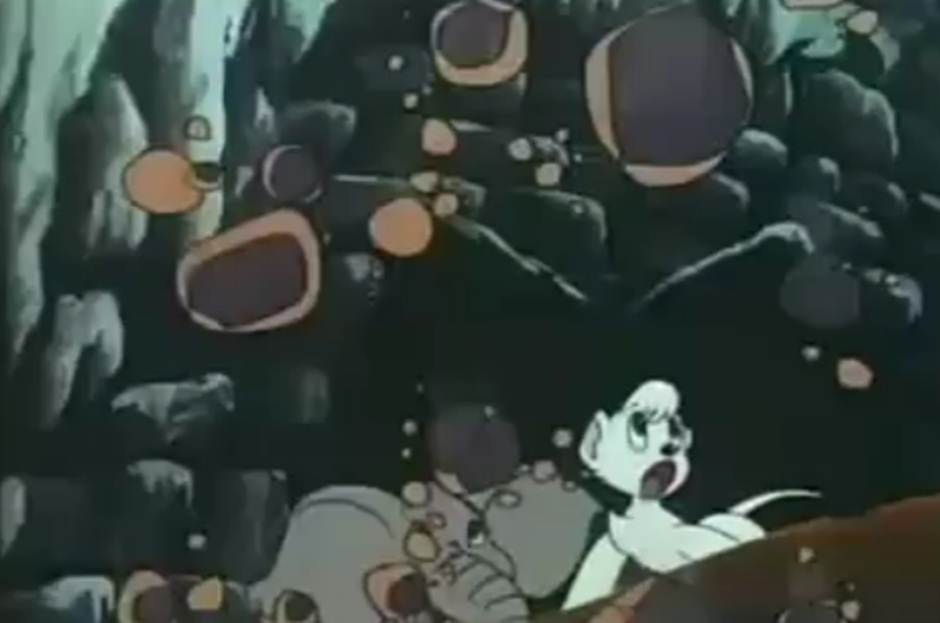 Barks fans know the emotional drill of the subsequent scene. We don't see a single sight with the impact of the flames licking at the bunkers where the Ducks have buried themselves in "Vacation Time," but the fact that Kimba and Peewee essentially must trust to good fortune to survive the fire, without making any last-minute preparations, almost makes up for it. Billie Lou Watt's dramatic coughing and hacking is both a great job of acting and a case for sober reflection, given that she would die of emphysema many years later. I can just imagine her inhaling an extra portion of cigarette smoke to help put this scene over...
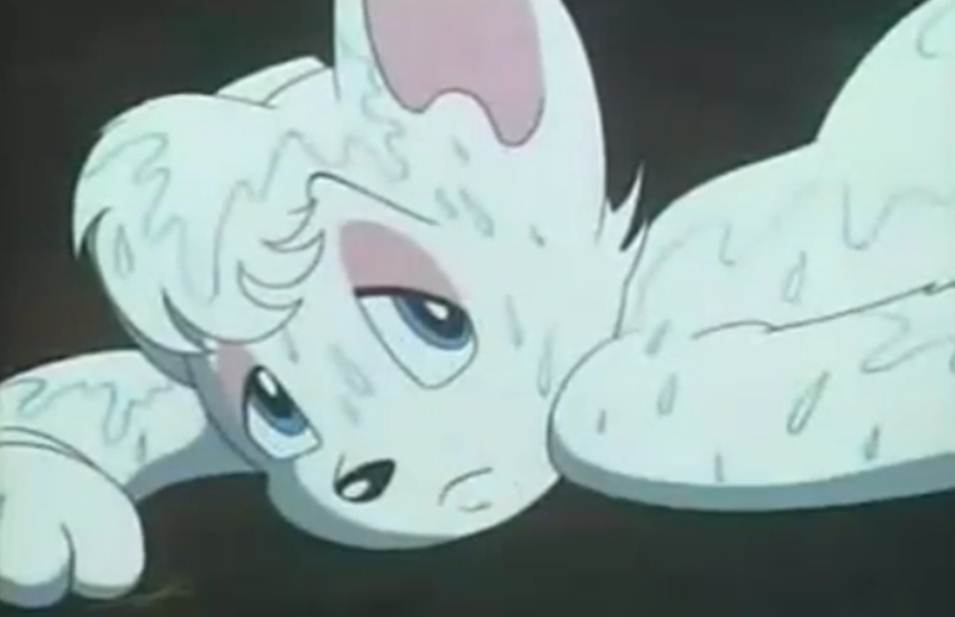 The other animals' rush to the rescue of the trapped pair is similarly packed with pathos and excellent acting. Kimba and Dan'l's reunion is exceptionally poignant, with Kimba uncommonly tearful, questioning the "foolishness" of his own heart, and "Uncle Dan'l" literally acting like a wise, forgiving old uncle. Kimba's emotional "delayed reaction" may partially stem from his realization that he is well and truly lucky to be alive, and that his well-meant generosity came close to depriving the jungle of its leader. Kimba's tears here are those of a mature leader with many responsibilities, rather than a child. A "Heart-ful" scene, with emphasis.
 And speaking of "delayed reactions," Kimba now has his own "Vacation Time Donald" moment as he recognizes a way to use the jungle's own natural resources to hold back the blaze. This is arguably even more impressive than Donald's famous brainstorm, in that Kimba has absolutely no civilizational accouterments on which to draw. This is going to be an appeal to sheer animal muscle-power... and, frankly, the animals' ability to put together their firewall with such dispatch is nothing short of mind-boggling. Tezuka must have been kicking himself that he didn't think of using such a dramatic sequence as part of JUNGLE EMPEROR. The theme of cooperation and hard work has rarely been as gloriously on display in Kimba as it is here. You might argue just a bit for the work that the animals put in to build the amusement center in "Jungle Fun," but there's really no comparison... the survival of the jungle itself is at stake here.
 The ep now begins to parallel the climax of "Diamonds in the Gruff" in earnest (and not simply because of the fire) as Kelly Funt takes the Gruff role and rumbles with it. Given the truly despicable nature of his earlier actions, Kelly's "face-turn" here is fairly remarkable. He doesn't even wait until after the emergency is past to issue a formal apology to Kimba and Peewee, as Gruff did to Kimba in "Diamonds." No doubt, it was the added muscle-power of Kelly's herd that allowed Dan'l "rescue truck" to come to the aid of Kelly, Kimba, and Peewee with such incredible dispatch, and for the animals to complete the firewall just in time to beat back the blaze. The ancient Egyptians who stood in awe of the Ur-Kimba in the flashback sequences of "Journey Into Time" would have been better served to have "prayed up" this bunch of critters to help them build the Pyramids!
 Unless Kimba imparted some information about incredibly fast-growing grass to Peewee and his herd, I don't see how the Gullygap elephants' going back to their burnt-out home constitutes a "happy" ending. ("We'll work hard to make Gullygap flourish again... unless we starve to death first!") The more proper ending would have been for Peewee's herd to join Kelly's, with perhaps an "advance party" being sent back to Gullygap to scout out potential locations for planting grass or starting a farm. But Kimba just loved using those endings of one or more characters leaving the scene while other characters bid them goodbye, so what's another such wrapup? Not a perfect episode, but pretty doggoned close, I'd say.
 Up next: Episode 49, "The Sun Tree."


