Showing posts with label Richie Rich. Show all posts

Friday, January 2, 2015

RIP Christine Cavanaugh and Edward Herrmann

I wish I could have waited at least a LITTLE while to do the first 2015 obituary post...

Retired (since 2001) actress Christine Cavanaugh died on December 22 of leukemia at the age of 51.  To the general public, she'll be best remembered as the voice of Babe the pig in the surprise film hit of 1995 -- she got paid a "whopping" $27,000 for that role, remarkably enough -- and her best-known voice-acting role is, and probably always will be, Chucky from Rugrats.  In this precinct, of course, Darkwing Duck's Gosalyn Mallard will forever be the first thing that comes to mind (or ear) when she is mentioned.  I don't know that another voice actress could have pulled off Gos' unique combination of sweetness and snarkiness quite so well. 

Actor Edward Herrmann died on New Year's Eve of brain cancer at the age of 71.  He was one of those peripatetic, all-purpose "hey, it's THAT guy again" performers... appearing in both movie and TV productions of brows both low and high, doing voiceover commercial narration (most famously for Dodge). His casting as Richard Rich, Sr., in the live-action Richie Rich movie (1994) was a bit odd -- he didn't look anything like the Mr. Rich of the comics, and he may have injected a little too much lightheartedness into his interpretation of the character -- but he wound up doing a very solid job, as did many of the other adult performers who strained mightily to make up for the black-tuxedo'ed, Macaulay Culkin-sized hole at the center of the film.  (If Macaulay's performance here didn't murder what was then left of his acting career, then it surely would qualify as an unindicted co-conspirator in the crime.)  I'll say this: Herrmann's turn as the elder Rich was certainly more memorable than that of Martin Mull, who did the honors in the movie's direct-to-video sequel, Richie Rich's Christmas Wish (1998).


Thanks to both of these talented performers for all their fine work, and let's hope that we DO NOT have to do this again for a good, long while.

Tuesday, September 9, 2014

DUCKTALES RETROSPECTIVE: Final Thoughts and a Look Ahead

A housekeeping note before I begin: I have placed links to the opening chapters of my two sets of animation retrospectives (DuckTales and Kimba the White Lion) at the head of my list of favorite blogs and Web sites, on the far right of this page.  The DT "launch page" has direct links to my reviews of all 100 of the episodes, and I'm going to include a similar set of links for Kimba as soon as I get the chance.

I'd like to augment the thank-yous I wrote in my review of "The Golden Goose, Part 1" by paying special tributes to GeoX and Greg Weagle.  Responding to their different takes on the eps played a central role in helping me to clarify some of the new thoughts that came to my mind while revisiting the series.  So, what better way to organize my final thoughts on the project than by sticking with tradition and answering some other DT-related questions that turned up during their own wrapup comments and posts? 

(The N&V Community) What, you're not going to favor us with the inevitable "Best of" and "Worst of" lists first?  Isn't that sort of thing kind of expected at this point?

Well, GeoX and his correspondents discussed such lists, whereas Greg did not -- at least, not formally -- but I can certainly get behind adherence to that particular tradition.  Here are my lists, which may be a little more extensive than what you might be expecting:

Best Half-Hour Episodes

1.  "Hero for Hire"
2.  "Sir Gyro de Gearloose"
3.  "Raiders of the Lost Harp"
4.  "The Uncrashable Hindentanic"
5.  "Top Duck"
6.  "Duck in the Iron Mask"
7.  "Home Sweet Homer"
8.  "All Ducks on Deck"
9.  "Double-O-Duck"
10.  "The Land of Trala La"

An exceptionally difficult list to put together; there were quite a few eps that I felt bad about leaving out, especially those from the Fenton-Bubba era.

Worst Half-Hour Episodes

10.  "Down and Out in Duckburg"
9.  "The Right Duck"
8.  "The Money Vanishes"
7.  "Duckman of Aquatraz"
6.  "Luck O' the Ducks"
5.  "Once Upon a Dime"
4.  "Magica's Magic Mirror" / "Take Me Out of the Ballgame"
3.  "Bubba's Big Brainstorm"
2.  "New Gizmo-Kids on the Block"
1.  "Yuppy Ducks"

Most of these are obvious, but I did put some thought into how to order them.  I decided to give "Once Upon a Dime" a little bit of extra consideration for at least trying to incorporate bits and pieces of Duck-comics lore into Scrooge's story, including some elements that were fairly obscure.  It may not have been done well, but "Dime" at least showed more essential ambition than the misbegotten two-episode experiment.

Best Half-Hour Components of Multi-Part Stories

1.  "Don't Give Up the Ship" ("Treasure of the Golden Suns")
2.  "Too Much of a Gold Thing" ("Treasure of the Golden Suns")
3.  "A Whale of a Bad Time" ("Catch as Cash Can")
4.  "Wrongway in Ronguay" ("Treasure of the Golden Suns")
5.  "The Golden Goose, Part 2"

Worst Half-Hour Components of Multi-Part Stories

5.  "A Drain on the Economy" ("Catch as Cash Can")
4.  "The Billionaire Beagle Boys Club" ("Time is Money")
3.  "Aqua Ducks" ("Catch as Cash Can")
2.  "Ducks on the Lam" ("Time is Money")
1.  "Bubba Trubba" ("Time is Money")

I'm not really down on "Super DuckTales," but the individual parts of that serial had some very tough competition to overcome.  I had a difficult time choosing between "GG2" and "The Duck Who Would Be King" for the final slot but ultimately decided to give the former the nod, primarily because of, you know, that whole "end of the world" thing.

Best Adaptations of Carl Barks Stories

1.  "The Land of Trala La"
2.  "The Status Seekers" 
3.  "The Unbreakable Bin"
4.  "Scrooge's Pet"
5.  "Lost Crown of Genghis Khan"

I'm not going to do a "Worst Adaptations" list, because, quite frankly, all of the Barks adaptations were at the very least passable, with the obvious exception of "Down and Out in Duckburg."  For my "Best" list, I favored those adaptations which brought something interesting and (in my view) appropriate to the table, apart from merely transferring the Barksian details into animated form.

Top One-Shot Characters Whom I Would Have Liked To Have Seen Again

1.  The Flying McQuacks ("Top Duck")
2.  The Phantom Blot ("All Ducks on Deck")
3.  Ludwig Von Drake ("The Golden Fleecing")
4.  Filler Brushbill ("Much Ado About Scrooge")
5 (tie).  J. R. Mooing ("Ducks of the West") and the Grand Kishki of Macaroon ("Catch as Cash Can")

Er... let me explain that last entry.  This was a sort of tribute to Joe Torcivia.  The Barks adaptation that Joe has always wished could have come to pass in the series was an adaptation of "The 24-Carat Moon" (UNCLE $CROOGE #24, December 1958), with Mooing (as "The Fabulous Cattle King"), "Kishy" (as "The Rajah of Eyesore"), and Scrooge rocket-racing to the newly-discovered golden Moon to claim its riches.  Sounds like a good idea to me.

Other Barks Stories (Unrelated to Any Series Offerings) That Would Have Made for Good DuckTales Adaptations

1.  "The Heedless Horseman" (UNCLE $CROOGE #66, November 1966) (could have been a great slapstick offering along the lines of "Hindentanic" if handled properly)
2.  "Mystery of the Ghost Town Railroad" (UNCLE $CROOGE #56, March 1965) (should have replaced "Ducks of the West")
3.  "King Scrooge the First" (UNCLE $CROOGE #71, October 1967) (yes, I know that Barks only wrote this one, but I think that it might have worked pretty well on-screen)
4.  "The Mines of King Solomon" (UNCLE $CROOGE #19, September 1957) (can easily imagine Fenton getting involved here, helping Scrooge survey his various businesses)
5.  "The Flying Dutchman" (UNCLE $CROOGE #25, March 1959) (could have been a REALLY scary Halloween-style episode)

Now, to tackle some of the issues raised by others.  I'm going to paraphrase the actual comments a bit in order to save space.  If you have any additional general, series-related questions to ask me, I'd be happy to tackle them in the Comments section.

(GeoX: "On Everyducks") How much of a detriment to the series was it to leave Donald (mostly) out of the picture, thus eliminating the "Everyman" role that Donald played so well in the $CROOGE adventures? 

I think it was a loss, but not a grave one.  As Geo himself notes, Launchpad and (especially) Fenton have their own personal motivations and hangups and thereby fill some of the gap left behind by the absence of Donald.  The softening of Scrooge also helped in this regard, as he took over Donald's domestic responsibilities and came across as a somewhat less remote and forbidding figure.

Speaking of Donald's "Everyman" role, a book about that very topic should be coming out soon.  I've already preordered it from Amazon.

(GeoX and correspondents: "Family") Is it out of character for Scrooge to be presented as living in a luxurious mansion, complete with servants?

I've got to admit, I'm prejudiced here, thanks to my longstanding affection for Richie Rich and the world in which he operated.  I see no issue with the DT Scrooge having an impressive place to call home, or, for that matter, operating as a classic business tycoon (as he did in numerous Barks stories).  If you take the "deracinated" image of Scrooge to its logical extreme, then he would concentrate almost exclusively on (1) hanging onto the fortune in his Money Bin; (2) going on occasional adventures to add to said fortune.  If you're going to accept that Scrooge may be motivated to go on adventures because of business deals or discoveries made during the course of his business endeavors -- which I assume that most of us do -- then you're going to have to accept that he is more in the mold of a classic tycoon, who differs from other such creatures in that he has an unusually strong attachment to the places from which he has come to get to that point.  And in the world of TV in which DT operates, a classic tycoon "should" have a mansion.

(GeoX: "Employees") Did the characterization of Launchpad deteriorate as time went on?

Not as badly as did the Nephews' characterization (at times), but the show definitely made much less use of him than it should have during the Fenton/Bubba period, and his characterization in these rare appearances basically traded off of what had been established during the first season, with relatively little progression.  The real falloff didn't begin until he joined the cast of Darkwing Duck.

(GeoX: "Villains") Which Barks villain was best realized in "DuckTales"?

I have no real complaint with the portrayals of Magica and Glomgold.  The "personalized" Beagle Boys (including Ma) had their moments, but I definitely think that it was a mistake to have relied so heavily on Big Time, Burger, Bouncer, and Baggy.  Burger and Baggy had all-too-obvious character "hooks" and did suffer from some "Flanderization" as time went on.  Bankjob and Babyface did not seem to have obvious "hooks," and Bugle/Bebop's "hook" was at least more interesting than either Burger's or Baggy's, so it is a real shame that they didn't get more screen time.  The "wild card" among the villain was Black Pete, who always had something of value to contribute and surely merited a few additional "costumed" turns.


(Greg) Did "DuckTales" "jump the shark" when Bubba was introduced?

No way; there were more than enough solid episodes among the final 35.  Unquestionably, however, the introduction of Bubba as a continuing cast member was the biggest mistake that the show ever made.

One issue that I raised during my discussion of the later eps should also be brought up here.  The sensibility of the show's humor style took a distinct turn towards the "sitcommy" during the Fenton-Bubba era.  That approach seemed to fit Fenton and his subcast (Mrs. Crackshell and Gandra Dee) quite well.  But, looking back on it now, I do wish that a few more globe-trotting, adventure-focused episodes had found their way into the second and third seasons, for balance's sake.  A hearty sense of humor could certainly have informed these tales, but a sense of real peril and intrigue should have been included, as well.  Don't forget that "The Uncrashable Hindentanic" included some moments of genuine danger along with all of the funny business.

.

.

.

So, what DuckTales-related matters can you expect to see me discussing in the future?  Here is a provisional list (which I pretty much sketched out already while reviewing "The Golden Goose", but it won't hurt to repeat it here).

1.  A review of the DuckTales Remastered video game

2.  Reviews of some DUCKTALES comic-book stories (both good and bad) that I've never reviewed in detail before

3.  Reviews of several DUCKTALES fanfics

There is also a possibility that, at some point in the future, I will return to some of my earlier RETROSPECTIVES and beef them up with additional images and such.  If I make any changes, I will be sure to let you all know about them on the blog.

Thanks again for patronizing my DUCKTALES project!

Monday, August 11, 2014

DUCKTALES RETROSPECTIVE: Episode 91, "Attack of the Fifty-Foot Webby"

And so, we enter "the top of the stretch"... only 10 more eps to go.  Original broadcast dates are going to start getting a little wonky before long, since three of the "second-season" episodes were famously held back to provide additional "new material" for the first season of The Disney Afternoon.  Of the "second-season" eps that were actually broadcast during the "official" (read: syndicated) second season, we're now down to a precious two: "Attack of the Fifty-Foot Webby" and "The Masked Mallard."  Quite an unlikely brace, to be sure...

I think that Greg has "Attack" pegged pretty accurately: Godawful premise, unimaginative first and second acts, partial redemption in Act Three.  My major deviation from this template is the reason for the success of the climactic action -- specifically, the "King Kong in reverse" showdown at McDuck Tower.  I'd like to give writers Alan Burnett and Mark Seidenberg due credit for coming up with the ingenious idea of mating (in a figurative sense, of course) the giant-sized Webby and the (relatively) pint-sized monkey previously known as the "Long-Tailed Gorilla," but, in truth, similar ground had been plowed almost four decades ago, albeit in a relatively obscure venue.  In issue #3 (February 1975) of RICHIE RICH PROFITS, Richie's girlfriend Gloria and the miniature gorilla "Kong King" gamboled about a scale-model version of the Empire State Building while being pestered by remote-controlled biplanes.  Amusingly, the two generic crooks in this Warren Kremer-drawn story, like the genially sleazy circus owner Happy Jack of "Attack," are after the monkey, as opposed to the monstrous maiden.

What makes the McDuck tower sequence work so well is not so much the basic visual setup as the canvas on which it is painted.  The earlier part of the ep featured more than its share of slovenly animation, a few examples of which we'll see below, but, when it comes time for the "money sequence," the much-put-upon Wang Films comes up aces full, splashing the screen with dramatic P.O.V. shots and ingenious employment of spotlights and shadows.  Wang doesn't get the sequence completely right -- when the top of the tower breaks off and Webby and "Mr. Fuzzy" plummet to the ground, the tower-piece doesn't follow them onto the pavement, or anywhere else, for that matter -- but the effort that was made here is readily apparent.  Even a predictable and cliched final post-Tower scene can't spoil the overall effect.

Unfortunately, before we get to the payoff, we are obliged to slog through some rather dreary preliminaries, starting with the inexplicable decision to base the entire episode upon the premise of Webby being too physically small to be noticed.  You don't have to be a Webby partisan to call "no way" on this one; you simply have to be able to use your functioning eyeballs and note, like GeoX, that Webby is the same size as the Nephews.  "Back Out in the Outback" avoided this mistake, explaining away Webby's unseen departure from the sheep station as a result of HD&L's carelessness and Webby's fixation on meeting Australian animals, rather than Webby's physical size.  Even the setup of "The Good Muddahs" bested "Attack"'s approach insofar as believability goes (with the arguable exception of Webby overreacting to the busy Mrs. Beakley's blowoff).  Judging by Webby's alternatively explosive and sarcastic reactions to other characters overlooking her presence, we are led to believe that this issue has been bothering Webby for some time.  Pardon me if I don't buy it.  Even Burnett and Seidenberg seem uneasy with their own premise here; Webby's jumping up and down, presumably "to see over HD&L and Bubba," during the scene in Scrooge's office is a textbook example of "jackhammering" to get a point across.

Burnett and Seidenberg then compound their folly by presenting Webby's decision to defy Scrooge and sneak aboard the Ducks' Africa-bound plane as if this were some new, bold idea.  Of course it isn't; Webby was playing the "tagalong" as far back as "Dinosaur Ducks" and "Cold Duck."  How far back do B&S plan to walk Webby's character, anyway?

As it turns out, far worse is soon to come.  Webby's enumeration of her "essential" supplies -- "my Quackypatch doll, extra hair ribbons, and a canteen of cocoa" -- is a distillation of all of the things that Webby-bashers delight in bringing up when they criticize the character: childishness, impracticality, tokenishness, and, of course, stereotyped "little-girl" behavior.  Contra Greg, this scene doesn't completely bury Webby -- her brief tenure in the shrunken Gizmosuit in "New Gizmo-Kids on the Block" will quite literally help to save that episode from complete and utter ruin -- but, BOY, does it give back almost all the ground that Webby has gained and fought to hold over the previous 90 episodes.  It says something, I think, that Bubba, whose amazing tracking skills are referred to and employed throughout the episode -- first to locate the "Long-Tailed Gorilla," later to track down giant Webby -- seems to be more fully developed a cast member here than the unfortunate Ms. Vanderquack. 

Happy Jack -- who represents, almost surely, the only melding of The Who, The Flintstones, and Ed Wynn in the long, strange annals of pop culture -- deserves special note as the series' first one-shot villain to employ the Beagle Boys as the functional equivalents of "hood-for-hire" mercenaries.  (Charles Upstuck III of "The Status Seekers" came close, but he hired the blueblood Beagle Boys, rather than their uncouth cousins, or half-brothers, or whatever.)  This may not sound like much of a departure, but in fact it is: even Carl Barks rarely used the idea.  Big Time's initial reluctance to participate in the "monkey business" is very much in character; recall how he blew off Magica de Spell's offer to team up in "Send in the Clones."  His teeth-grinding deference to Burger when the deal is closed might therefore reflect a subconscious admission that the palmy days of the first season, when the Beagles actually seemed like a legitimate threat, are well and truly over, and the more caricatured members of the Beagle bunch are now driving the "plot train"!

The scene in which Jack is first introduced was obviously inspired by the Flintstones episode "Circus Business" (1965), in which a poverty-stricken carnival owner bestows his flea-bitten show upon the credulous Fred.  We get the "group montage" in which the unpaid performers walk out on Jack and a featured appearance by a "half-man, half-woman" character for good measure.  The Beagle Boys' later role as "monkey trainers" for the captured "Long-Tailed Gorilla" might also be a reflection of the denouement of the Flintstones episode, in which the Flintstones and the Rubbles manage to put on a show to help Fred avoid jail time for "misrepresentation," but I'm not nearly as confident of a connection there.

The jungle sequence that climaxes with Webby falling into the "magic spring" and growing to 50 feet in height couldn't have been more obvious and square-cut if Burnett and Seidenberg had consciously set out to make it so.  All of the tropes -- cheesy Beagle Boy disguises, Webby's capture by the "Long-Tailed Gorilla" and subsequent discovery of the ape's secret, the reveal of the "magic spring" and Webby's dunking -- are all visible from several hundred miles away, even for someone of normal stature.  This fact tends to focus one's attention on side matters, and the ones that pop out at us here are not flattering, particularly in the area of animation.  The supposedly creepy reveal of the "Long-Tailed Gorilla" as a pair of watching eyes, unlike the similar reveal of Prince Greydrake in "Jungle Duck," is likely to elicit laughter rather than fear:

The REAL "Jungle Phantom"?

Likewise, Webby's "waterslide" is every bit as awkwardly staged as Greg suggests, with Webby seemingly sitting on the surface of the water as she floats along.  I guess this means that Webby can be classified as half-divine.
To be fair, Webby's bonding with "Mr. Fuzzy" is reasonably cute without being overly cloying, and Webby should receive some credit for doping out the truth about the sizable simian all by her lonesome.  It would probably have been better, though, had her reference work of choice been the Junior Woodchucks' Guidebook, as opposed to a "mere" ABC picture book.

After the oversized Webby is brought home, we are treated to an unexpected second appearance by Dr. Von Swine, whose ego appears to have been inflated since the events of "Yuppy Ducks" for no apparent reason.  Von Swine is slightly more tolerable here than in that earlier train wreck of an episode, but it must be admitted that he could easily have been written out of the plot by the simple expedient of the Nephews' having checked the JW Guidebook and found the recipe BEFORE they came home, which one would normally expect them to have done.  All Von Swine actually does here is to provide some of the formula's more esoteric ingredients, such as "Bootle bug dust," and the list of necessities could easily have been made sufficiently mundane that HD&L could have tracked them down all by themselves.  I guess that the decision to use Von Swine was simply due to the fact that Howard Morris was already at hand.
Before you swoon over yourself too much, Doc, you ought to consider reapplying the Grecian Formula...

The comparatively perfunctory "effects of a giant Webby" sequence could have benefited from some additional action scenes -- for example, showing, rather than describing, some of HD&L and Bubba's disastrous attempts to play with their newly-enlarged pseudo-sibling -- but we do get a touching moment in which Webby weeps about her fate, along with *sigh* the obligatory wish that she be "little again" (as if she ever actually were).  Immediately following this scene, the ep at long last begins to ascend to something legitimately watchable, with the put-upon Webby finally deciding to get proactive after she learns via TV that Happy Jack has put the "Long-Tailed Gorilla" on exhibit.  It's about time that Webby stopped whining about her fate and tried to use her enhanced stature to do something meaningful.  I do have to wonder how Scrooge was able to construct that oversized bed so quickly.  Does this mean that the giant bed that a younger Scrooge dreamed of owning in Vic Lockman and Barks' "The Invisible Intruder" is both (1) canonical and (2) still in storage somewhere in McDuck Mansion?

There follows a nearly impeccable Act Three, with Webby giving far more than she gets atop McDuck Tower and Bubba, for once, playing the lead "Nephew," as HD&L and Scrooge are content to follow him while he is tracking down "Webba."  One might grouse about the fact that Happy Jack and the Beagles get off relatively lightly, suffering only a plunge into Duckburg Bay, but, given that they never actually commit a crime -- they use strongarm tactics to try and keep the Ducks away from the "Long-Tailed Gorilla," but they wind up capturing the ape, if not entirely fairly, then at the very least squarely -- the standard "frog-march to jail" would have seemed a bit on the "overkillish" side here.  In addition to the obvious King Kong references, Burnett and Seidenberg throw in allusions to Godzilla and the classic horror film The Fly (1958).

"Yeeesss, I SEE!"

The ep shifts back into "we've-seen-it" mode in the final minute, with Webby and the restored "Mr. Fuzzy" having a tearful departure and the Nephews and Bubba promising to "keep Webby in sight" from now on.  (What about the fate of "McDuck's Drive-Thru Safariland"?  Did Scrooge reconsider the investment after the "Long-Tailed Gorilla" ceased to exist?)  So I think it's fair to say that Act Three, all by itself, saves this episode from a failing grade.  No need to despair, though: in the few episodes we've got left, high quality will generally be the norm, rather than the exception.

.

.

.

"DuckBlurbs"

(GeoX) Giant Webby is way huger than Giant Monkey. I suppose the idea is that she's the same size in relation to it as she would be if they were both regular-sized, but in that case, that's one minuscule monkey. 

One could make the argument that Webby, being larger than the monkey, experienced a faster rate of growth than the monkey when she was enlarged, but that doesn't hold water; normal-sized Webby turns out to be only slightly larger than the normal-sized monkey.  Wang Films probably should get most of the blame for this.

(Greg) And then we start flushing the episode down the crapper as Webby gets mad because she was hiding all morning hoping they were looking for her. Now the problem with this is: There was no indication that the nephews wanted to play with her. Yes; it's the contrived and sexist: Boys refuse to play with girls plot line because she's too little to them. This works a lot better with Molly Cunningham because she's legit small and she's smaller than Kit is.

It wasn't so much the fact that the boys "refused to play" with Webby as the fact that they weren't even aware of her presence.  The episode commit a later faux pas along these lines when giant Webby says that the boys "refuse to play with [her]" and the Nephews proceed to explain that their attempts to do so led to disaster.

(Greg) Happy Jack is not happy at all of this happening and needs a brand new attraction to get back in the good graces of the customers. He reads the conveniently placed newspaper and notices that Scrooge is going ape for an ape as he walks out of the trailer and he claims that the long tailed "gorilla" is his meal ticket in.

Strange... Scrooge told the kids that he wanted to beat other "Gorilla" searchers to the punch, yet Happy Jack learns of the expedition from a newspaper article.  So how did the word get out?  Incidentally, the name of Jack's circus, "Circus Barkas," is a parody of a real-world circus... one that I actually saw as a child, no less.

(Greg) Huey thinks he hears something and out come the Beagle Gorillas acting so badly that if these kids and Scrooge fall for it; then Airhead Syndrome is at an all time high. As in "number of drugs needed to enjoy this angle". And yes they fall for it...

Point *sigh* taken.  It's especially annoying here because all the Beagles would have had to do to make better disguises was to take off the number plates and masks.  Is that REALLY so hard to do?

(Greg) Anyhow; the monkey pulls to the left some big ass blades of glass and we barely see a lake of hot molten blue liquid in sight as Webby deduces that this made the monkey big and the monkey nods in approval. 

The not entirely dissimilar Voyage to the Bottom of the Sea episode "Leviathan" (1967) uses an "underwater fissure," rather than a pool, as the source of the enlargement.  Like the fissure, the effects of the pool extend well beyond the immediate vicinity of the source.

 
(Greg) ...man[,] the "big girls don't cry" line from the nephews annoyed me too. Big girls do cry; usually when someone BULLIES them for being big and fat.

I don't think that Burnett and Seidenberg were making a real-world point here so much as simply parodying one of The Four Seasons' biggest hits.

(Greg) Happy Jack wakes up Burger by what was supposed to be a kick to the chest; but Wang Films screwed up it so bad that it looks like Burger got kicked in the balls.

Picture, thousand words:

(Greg) We cut to a police car as the police dog [Chief O'Hara clone] from Ducky Horror Picture Show... is on the transmitter and wants the army, air force and the Goose Gun. The WHAT?! What the hell is he talking about?

He actually said, "Call in the Army, the Air Force, the Goose Guard!"

Next: Episode 92, "Ducky Mountain High."

Monday, June 9, 2014

DUCKTALES RETROSPECTIVE: Episode 83, "Metal Attraction"

It's taken a bit longer than expected, but we've finally reached the first true "original classic" of DuckTales' second season.  (I use the qualifier "original," of course, because "The Land of Trala La" was an adaptation of a Barks story, albeit one with a whole lot of new elements.)  This opinion is actually a slight upgrade of my initial assessment of the ep.  I liked it just fine the first time around, but it didn't quite knock my socks off in the manner that such future second-season efforts as "A Case of Mistaken Secret Identity," "The Big Flub," or "The Golden Goose" did.  With the wisdom of hindsight, I have a much greater appreciation for some of the risks that it took, especially in the area of... shall we say... interpersonal relationships.  It's fair to say that in no other DT ep was sexual tension ever planted so definitively front and center as a dominating influence.  At the same time, the script serves up a healthy portion of satire -- some of it surprisingly sharp, considering that one of Disney's greatest sources of pride and joy is one of the main targets -- and it also offers a textbook example of how to deliver a "character learns a lesson" moral without pulling the character in question completely, or even partially, out of character, or even making the character unlikable (even temporarily so) in order to get the point across.  All in all, a nice comeback episode for Ken Koonce and David Weimers following that recent... unpleasantness... though Alan Burnett (who co-wrote) and Cliff MacGillivray (who got a story credit) probably chipped in a large portion of the goodness, and Susan Blu's uber-caffeinated performance as Robotica is the X-factor that helps lift the production from good to great.

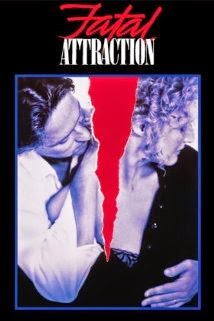
The actual debt that "Metal Attraction" owes to the popular thriller that inspired its title is relatively limited in terms of specifics, and particularly in terms of the emotions we feel regarding the characters.  Unlike the Michael Douglas character in Fatal Attraction, who came to regret (and that's putting it mildly) his brief extramarital fling, we sympathize with Fenton when the hyper-emotional robot maid Robotica sets her sensors on Gizmoduck.  Likewise, Robotica can't really be faulted for anything she does in any of her modes, whereas the Glenn Close character... well, can.  That's not to say that the characters don't bring at least some of their troubles upon themselves.  Fenton, after all, wouldn't have been put in the "Duckyland double-date dilemma" that dominates Act Two had he not been overly attentive to Gandra Dee, prompting his girlfriend to set up the outing to show him how other dating couples act.  As an audience, we are placed in the enviable position of enjoying and laughing at Fenton's subsequent discomfiture without feeling all that guilty about it.

There are a pleasing number of call-backs here, starting with the opening scene in which Gyro is inspired to tackle "domestic engineering."  Bang-bang-bang, Gyro refers to past exploits involving time and space travel and even references a goofy throwaway gag from "Super DuckTales" before confessing to Scrooge that he has "no new frontiers to conquer."  Given Gyro's robotic recidivism (which Scrooge not-so-gleefully comments on once he gets his first look at Robotica), perhaps the inventor has a point.

Mrs. Beakley's sudden desire for domestic help seems to come OUT OF NOWHERE and is the one major aspect of the episode that has a contrived feel to it.  We've seen Mrs. B. overworked before -- for example, when she's obliged to decline a chance to play with Webby in "The Good Muddahs" -- but whence cometh this tipping point?  Was it the arrival of Bubba and Tootsie?  Seems logical to me, especially if Mrs. B.'s current list of duties include "scooper detail."

The "overly mechanical" version of Robotica reminds me a bit of the interpretation of the robot maid Irona (oddly enough, voiced by Joan Gerber!) that was presented in the early-80s Hanna-Barbera Richie Rich show.  In her few seconds of screen time, "Robotirona" even performs a classic Irona routine, lifting up a heavy "something" (in this case, a refrigerator) in order to dust underneath it.  I shouldn't go too far with the analogy, though; Irona always had some personality, even in her most robotic forms, and never scared anyone to the extent that our cranium-spinning cyborg does here.

Gyro fixes the "stiffness issue" by impregnating Robotica with a floppy disk (remember those?) that is presumably encoded with the entire gamut of emotions that will soon be on extravagant display.  Which leads me to wonder: If the insertion of the disk caused Robotica to develop a personality, then couldn't the emotions be neutralized simply by removing said disk?  If Fenton had known about that little detail, then perhaps he could have suckered Robotica into a hug, or something, and returned her to her "factory settings."  Too bad that he wasn't privy to this little programming detail.

The emotionally amped Robotica takes zero time to make an impression... and, if Launchpad had made a similar "impression" when he smashed into the wall of Toupay in "The Duck Who Would Be King," then he would probably have gone right through the wall.  Blu's hysterically hamboned delivery doesn't need any amplification, but, for some reason, it gets some when one of Robotica's verbal riffs is accompanied by a ba-dump-tush sound, as if it were some sort of comedy-club punchline.  We'll hear a similar frisson a little later when the Robotica-entrapped Gizmoduck pleads, "Kids are watching!"  Quite frankly, I don't understand why the embellishments were needed.  What, you writers don't think this stuff was funny in and of itself?  What's next, a laugh track?

Fenton's concurrent investment of poor Gandra Dee with all manner of gifts, both inanimate and otherwise -- well, actually, do those singing chocolates guys count as animate or inanimate? -- marks the first time since "Super DuckTales" that we have seen these two characters interact.  It's immediately clear that, while Fenton may have gained in self-confidence thanks to his Gizmoduck alter ego and a newfound appreciation for his own latent abilities, he still has some ways to go to be completely comfortable "in his own feathers."  Burying Gandra with so many material goods indicates a certain level of insecurity in Fenton regarding his ability to hold Gandra's affections on his own merits -- this, despite Gandra's open admission at the end of "Super DuckTales" that she had always wanted to go out with him anyway.  Gandra's deep reservoir of affection for Fenton is probably the only reason WHY she doesn't take GeoX's advice and hit him with a restraining order.  Despite his annoying behavior in these scenes, Fenton doesn't do anything to make himself seriously unlikable; we recognize his behavior here as a logical extension of his personality as a whole.  As is reflected in his "Have I fallen short?" response to Gandra's recitation of his various efforts, he is simply one of those perpetually-on-the-make types who can't be satisfied with things as they are.  The upcoming "The Big Flub" will spin off the same conceit, with Fenton asking Scrooge to give him more business responsibilities so that he can show what he can do (to himself, as well as to Scrooge).

I don't want to let Gandra completely off the hook here.  Yes, all things considered, she does react to Fenton's smothering with disturbing passivity.  She does, however, have several opportunities to confront Fenton directly about what he is doing -- and she never takes them, instead using such indirect criticisms as "Can't you see?" and "You wouldn't understand," or having Fenton go on the double date in order to enlighten him through experience.  I guess that this makes some sense if you buy into the whole "men and women are from different planets and express things differently" theory, but come on -- if you're that discomfited by my actions, then I would certainly appreciate your telling me so.  Of course, if Gandra hadn't waited until the very end to verbalize her feelings (to Gyro, of all people!), then we wouldn't have had much of an ep.  Still, it bothers me to see Fenton get all of the blame here.

Fenton gets to see "how the better half lives" when Gizmoduck reports to Scrooge for repair duty (huh?  Isn't Gizmo kind of overqualified for such mundane tasks, just as he'll be overqualified for various other jobs in "The Unbreakable Bin"?) and sets Robotica's pistons a-popping.  The innuendo here gets fairly serious, especially in the scene at the Money Bin when Robotica wraps the hapless Gizmo up in her extendable arms and forces him to the ground.  Luckily, Blu's acting is so over-the-top that any arousal that might be occasioned here is dissolved in guffaws.

"Over the top," did you say?

The scene at the "Econo-Lube and Perm Boutique" kicks the weirdness factor of the episode up several additional notches.  The obvious parody of the "Madge" Palmolive ads isn't the half, or even the quarter, of it.  For the dual-entity beautification gag to make any sense in the first place, we have to conclude that "Midge" has had patrons like Robotica before, else why would Robotica have bothered to patronize the place?  Does this mean that there are other robots (of necessity, not all of which could have been created by Gyro) walking around Duckburg as a matter of course?  When did we suddenly enter the hyper-advanced Duckburg of Carl Barks' "Island in the Sky"?

In passing, we learn here that Gandra is a "receptionist" at the bean factory.  This is something of a surprise, actually, given that Gandra's first act in "Super DuckTales" was to come out onto the factory floor, files in hand, and pass along the boss' compliment to Fenton.  That's a task that one would normally expect an employee with more authority to perform.  Of course, we'll eventually learn that Gandra's talents extend well beyond looking pretty and taking phone calls, so perhaps the duties of a "receptionist" at the bean factory are more comprehensive than one would think.  Actually, they would almost have to be.


Duckyland, the site of the double date (or is it a threesome?  It's kind of hard to tell), features parodies of Disneyland sites both mundane (the distant shots of a generic Matterhorn-style mountain and castle) and ingenious (the "Teacup Ride," in which patrons literally get to experience a "Tea Party" from the inside).  The Tunnel of Love -- shaped like a giant box of chocolates with a ribbon tied around it, in case you didn't notice -- was probably thrown in just as much to provide a cordon sanitaire between Duckyland and its real-world namesake (which, famously, does not have that cliched carnival conveyance) as to provide a fitting setting for the breakup/breakdown of the Gizmoduck/Robotica relationship.  Even so, it's hard to miss the sting contained in Fenton's description of the park as "this middle-class marketplace of mirth."  It's one thing to riff on park rides and such, quite another to zap Disneyland's stereotypical clientele.

The obligatory "two places at once" shenanigans are carried off rather well.  Fenton does slip a couple of times -- using his own voice when Gizmoduck orders the drinks, forgetting to remove a Gizmo-arm when he comes to join the ladies on the bench -- but, considering that he never thinks to use his established "popping up out of nowhere" routine to make his life easier, he manages to pull off the charade almost as well as Clark Kent did during the woebegone Superman IV.  Being Fenton, however, he can't keep the plot from eventually coming unstuck, with the offended Gandra charging off in a huff.  Nor can he be completely faulted for trying to "turn off" Robotica's affections by telling her the "other woman" story in the Tunnel of Love.  It's the truth, after all -- at least, when the "aluminum siding" is removed -- and how was he to know that his action would result in Robotica going berserk, complete with that unforgettable Susan Blu screech?

The ep stumbles a bit at the start of Act Three, when the crazed Robotica returns to the Mansion to... er, do some dusting?  Granted, it's agitated and overly emotional dusting, but I would think that she would be fixated on finding Gizmoduck at this point.  Instead, we must wait for a glimpse of the family portrait and Scrooge's overheard phone conversation to see her to go on the warpath once more, this time to find the "other woman."

As some of my readers have noted, the existence of the portrait below does, in fact, suggest that Bubba and Gizmoduck have met at some point, even though they never will do so on screen.  There is something contrived about the idea, however, at least as it is presented here.  Bubba's presence in the portrait, I can understand, but since when has Gizmoduck been considered a member of the McDuck household?  Gizmo may have visited enough times that, in the words of a Nephew in "A Case of Mistaken Secret Identity," "the welcome mat has skid marks," but, hey, just because my best friend in childhood came over to play lots of times didn't mean that I considered him to be one of my siblings.

After Fenton's massive marzipan make-good has finally pushed Gandra over the edge -- demurely, of course -- we get some Fatal Attraction-style nastiness as Robotica confronts Gandra with her "treachery."  At least no knives or boiled rabbits were involved (though the rabbit anthros who were on the "Teacup Ride" might beg to differ regarding the latter).  Robotica's attempt to destroy both Gandra and the Money Bin at one blow finally gives Scrooge a tangential reason to care about the outcome, and Fenton, thanks to overhearing Gandra's lament, finally gets the hint that he's been coming on too strong to his lady.  I agree with Greg that this sequence -- in particular, the showdown at the Bin -- whisked by a little bit too quickly to have the impact that it could have had.  A little more threatening of Gandra by Robotica, a more artfully-staged explosion (that missile sure took its sweet time to reach the Bin, didn't it?), and we would really have had something.   


I can certainly see where GeoX is coming from with his comment about the Stepford Wives-esque reprogrammed version of Robotica.  The problem here, I think, stemmed from the fact that Susan Blu, having gone to both extremes in her previous interpretations of the character, apparently couldn't decide  what a "normal" Robotica ought to sound like.  She tried to dial down the emotion while returning some of the "robotic" flavor to the voice, and the end product reflects the uneasy compromise.  Robotica's dialogue itself isn't all that unnatural or off-putting, but the voice makes it seem so.  It's a smudge, but a minor one, on an otherwise top-drawer voicing performance.

If the point weren't already obvious, "Metal Attraction" reinforces, beyond the shadow of a doubt, Fenton's worthiness as a member of the Duck cast.  This is basically his episode -- Scrooge, HD&L, and the rest of the clan play only a minor role -- and he carries off the responsibility without a hitch.  Like Fenton, Koonce and Weimers prove that they, too, can learn a valuable lesson; "Metal Attraction" wears its moral far more lightly than some of the duo's earlier, more heavy-handed efforts to get a "bigger point" across (*cough "Down and Out in Duckburg" *cough*).  The "sitcom era" of DuckTales may have a different feel to it than the first season, but "Attraction" is the first significant indication that the show's somewhat looser approach doesn't mean that storytelling quality will be pitched out the window.  More examples of this will follow... but first, we will be obligated to digest another undeniable stinker.

.

.

.


Bumper #18: "Cashflow"
.

.

.

"DuckBlurbs"

Fun fact before we begin:  The official release date of Fatal Attraction was Friday, September 18, 1987 -- the first day that syndicated stations across the country broadcast "Treasure of the Golden Suns."  I wonder how many people saw both Fatal Attraction and "Golden Suns" on that same weekend.  There must have been at least a few, given that DuckTales attracted adult viewers from the start.

(GeoX's correspondent "Christopher") I notice that in one of Robotica's hyper-emotional states she's clearly crying visible tears. What do you think they are– axle grease droplets?
(GeoX) Let's hope so--the idea that Gyro would have included actual bodily fluids in her construction inevitably leads to conclusions that are way too gross and disturbing to dwell on.

How about the fact that Robotica offers Gizmoduck lunch and cafe au lait?  Why would a robot be offering another presumed robot actual food?

(Greg) We begin this one with Scrooge's mansion as we zoom in and head inside the basement as Gyro is standing in piles of dollar bills while Scrooge is doing something with a giant ass pot. He fishes out a jar with tongs as Gyro talks about having nothing left to conquer in the invention field. Scrooge puts the money in the jars as Gyro ponders making a machine to help him with his money canning. Yes; he's canning money. And you thought canned heat was absurd.

"Can" it be possible that this was a reference to the Barks cover of UNCLE $CROOGE #15 (September-November 1956)?  Yes, it certainly "can," even though Scrooge is canning coins, rather than bills, in the Barks version.  Unlike the "cash castle" in "Blue Collar Scrooge," the canning conceit carries through to the very end of the episode, as we see several additional scenes in Scrooge's basement cannery. 

(Greg) Then the door bell rings and Robotica goes to answer it; but not before going into an awesome rant that goes on and on before Scrooge blows her off. 

Scrooge's exasperated reactions are just as funny as Robotica's words here.  I'm not trying to be a spoilsport, but this scene was probably the sole reason why Duckworth was not part of the episode, since he usually handles door duties.

(Greg) Then we head to the teacup ride which Wang Films animates all right (proving me wrong again); although when the bunny furries get dunked; it looks awful. I think that's the only time they used bunny rabbit anthros for this show.

I think it was, too.  Could this have been a reference to the notorious "bunny-boiling" scene in Fatal Attraction?

(Greg) Mrs. Beakly is at the closet and Robotica shows her the [family portrait] as evidence looking mighty pissed off. Beakly claims that she barely likes [Gizmoduck] and has nothing to do with him.

Which would seem to preclude Gizmo being included as part of a family portrait, no?  I'm surprised that Robotica didn't press Mrs. B. harder on this.  Of course, by this point, her powers of reasoning have pretty much malfunctioned...

(Greg) Gizmo unties Gandra and Gandra hopes she's less emotional this time around because she smothers Gizmo Duck like Fenton smothers Gandra. Gizmo Duck realizes why she doesn't like Fenton anymore and thinks Fenton has got it since they are best buddies. I cannot argue with that overwhelming logic there Gizmo Duck. Gizmo asks Gandra for one more chance...

I really like the way Hamilton Camp reads these lines.  He makes it sound as though a humbled Fenton "gets it" without slipping out of character as Gizmoduck. 

No new RETROSPECTIVE this coming week, as I'll be in Kansas City for the AP Statistics Reading.  So you'll have to wait a bit before I "favor" you with that deathless classic: Episode 84, "Bubba's Big Brainstorm."